# Conferences
##
expand\_more
## Harvard-Princeton
Open all sections Close all sections
### Harvard-Princeton 2026 expand\_more

[Donato Creti](https://harvardartmuseums.org/collections/person/34066), Italian (Cremona, Italy 1671 - 1749): Landscape, Brown ink on cream antique laid paper.
Harvard Art Museums/Fogg Museum, Gift of Dr. Fritz B. Talbot
### **The Nineteenth Annual Harvard-Princeton Graduate Conference**
### **in Early Modern History**
February 6-7, 2026
History Dept Conference Room, Robinson Hall, Harvard Yard
**Organizers: Ann Blair and Jenny Rampling**
All proceedings will be held in Robinson Hall Dept conference room. Each speaker will have exactly 30 minutes at their disposal. We strongly advise that talks last no more than 15 minutes each, to allow for as much discussion as possible.
#### **FRIDAY FEBRUARY 6, 2026**
**2:00 –2:15 pm Introductions**
**2:15-4:15 pm Session 1: Material History**
Chair: Hannah Marcus (HU)
*-Meredith Noorda (PU), “Catholic Liturgical Textiles Between France and North America, 1500-1800”*
*-Saffron Sener (HU), “‘Michipichik’ and ‘la granadille’ - A Closer Look at the Codex Canadensis”*
*-Deborah Thompson Shalshelet (HU), “Scrolls within Scrolls: Ashkenazi Jewish Wimples as Books”*
*-Anna Speyart (PU), “Persian Ice in European Eyes: Safavid Ice Technology in Seventeenth-Century Travel Writing”*
**4:15-4:45 pm Coffee Break**
**4:45-6:45 pm Session 2: Science**
Chair: Jenny Rampling (PU)
*-Gretchin Kepplinger (PU), “Experiment and the Material Culture of Early Modern Love Magic”*
*-Ana Luiza Nicolae (HU), “Shape of Earth: Hydraulic Expertise and Knowledge about the Ground in 16th- and 17th-Century Europe”*
*-Wenfei Wang (HU), “Mechanized Puppets and the Transmission of European Mechanical Knowledge in Early Modern China”*
*-Mark Chen (HU), “Early Modern Japanese Mathematics Through the Lives of Three Figures”*
#### **SATURDAY FEBRUARY 7**
**8:30-9:00 am Breakfast**
At 8:45am Paolo Sachet (La Sapienza, Rome) will give a brief presentation on the large project to which he is contributing to study the provenance and material history of Italian incunabula preserved in U.S. libraries, situating their trajectories within the wider displacement of European book heritage between the eighteenth and twentieth centuries.
**9:00-10:30 am Session 3: Politics**
Chair: David Bell (PU)
*-Sophie Wilkowske (HU), Women in the Thought and Lives of 18th-Century Economic Theorists*
*-Anastasiia Lystsova (PU), Pandora’s Box of Sovereignty: Fundamental Law and Russian Politics in the Commonwealth and Sweden under Catherine II*
*-Joanna Hope Toohey (PU), Good Patriots and Misguided Citizens: Evaluation, Persuasion, and Second Chances in the French Revolution*
**10:30-11:00 am Break**
**11:00-1:00 pm Session 4: Textual Cultures**
Chair: Eric Gurevitch (HU)
*-Caroline Engelmayer (HU), Rewriting the Vergilian Career in Sabinus’ Reply-Poem to Heroides 5*
*-Wes Viner (PU), A New Aristotelianism: Tradition and Novelty in the Natural Philosophy of Alexander Ross*
*-Thomas Noriega (HU), The Prehistory of University Presses 1520-1780*
*-Manny Medrano (HU), Knotted String Alphabets and the Inca Genealogy of Braille*
**1:00-2:00 pm “Meet the author” lunch with HUPU alumni:**
-Paris Spies-Gans, author of *A Revolution on Canvas: The Rise of Women Artists in Britain and France, 1760-1830* (2022)
-Richard Calis, author of *The Discovery of Ottoman Greece Knowledge, Encounter, and Belief in the Mediterranean World of Martin Crusius* (2025)
-Spence Weinreich, contracted for *An Experimental Box: A History of Solitary Confinement*
**2:00 pm** Farewell and announcement of HU-PU 2027
**3:10 pm Amtrak direct to Princeton Junction**
### Harvard-Princeton 2025 expand\_more
#### **Realms Lost and Won**
**The Eighteenth Harvard-Princeton**
**Conference in Early Modern History**
*February 7-8, 2025*
*Dickinson Hall, Princeton University,*
*Room 211*
Organizers: Ann Blair and Tony Grafton
\--ONLINE OPTION--
All proceedings will be held in Dickinson Hall Room 211, and on Zoom, for audience members and HU-PU alumni who cannot take part in person. Each speaker in sessions 1-3 and 5 will have exactly 30 minutes at their disposal. We strongly advise that talks last no longer than 15 minutes each, to allow for as much discussion as possible. HU-PU alumni/ae presenting their books in session 4 will have 10 minutes to present their work.
[Abstracts (PDF-download)](https://hu-my.sharepoint.com/:b:/g/personal/agoeing_fas_harvard_edu/Eaajrofq2fVKq9kO4iH1dukBDDJMFFkqJI3td1xg3hz5Hg?e=uEFkf2)
##### **Friday, February 7**
***Session 1 | 2:30-4:00 PM: Living Religion*** **Chair: Ann Blair (Harvard)**
Deborah Thompson (Harvard), The Bar Mitzvah Bentsher: A Jewish American Phenomenon
Niki Dinenis (Princeton) The Holy Household Revisited: Laywomen Writers and Spiritual Teachers in Germany on the Eve of the Reformation
Mateo Montoya (Harvard)— Reading Reduction: Baronio and the Primitive Church on the Jesuit-Guaraní Missions in Paraguay
*Coffee Break 4:00-4:30 Dickinson 210*
***Session 2 | 4:30-6:00 PM: Making and Trading*** **Chair: Yonatan Glazer-Eytan (Princeton)**
John White (Princeton), An Amphibious Art: Carving Ivory from the Sea
Anna Speyart(Princeton), Ice Trading and Religious Reform in Seventeenth-Century Pisa
Austen Van Burns (Princeton), Something From Nothing: Tailor-Made Authority in the Bavarian Military, 1788-1793
**Dinner 6:30 PM Dvaraka 36 Witherspoon Street**
##### **Saturday, February 8**
**Breakfast 8:30-9:00 Dickinson 210**
***Session 3 | 9:00-10:30 AM: Crafting Empires*** **Chair: Hannah Marcus (Harvard)**
Ahmed Y. AlMaazmi (Princeton), Occultism and Imperialism in the Early Modern Indian Ocean World
Sergio Leos (Harvard), “Melhor estalagem do mundo novo:” Imperial convergence in the Azores, 1500-1640
Constantine Theodoridis (Princeton), The Stool and the Sofa in an Empire of Ottomans: A Cushion-ary Reappraisal (1660-1690)
*Coffee break 10:30-11:00 Dickinson 210*
***Session 4 | 11:00-12:30 Making Many Books*** **Chair: Jennifer Rampling (Princeton)**
Frederick Clark (USC) | *The First Pagan Historian: The Fortunes of a Fraud from Antiquity to the Enlightenment* (Oxford, 2020)
Valeria López Fadul (Wesleyan) | *The Cradle of Worlds: Language and knowledge in the Spanish Empire* (Johns Hopkins, 2025)
Helen Pfeifer (Cambridge) | *Empire of Salons: Conquest and Community in Early Modern Ottoman* Lands (Princeton, 2022)
Paris Spies-Gans (Independent Scholar) | *A Revolution on Canvas: The Rise of Women Artists in Britain and France, 1760-1830* (Yale, 2022)
**Lunch 12:30-1:30 Dickinson 210**
***Session 5 | 1:30-3:00 Moving Ideas*** **Chair: Carolina Mangone (Princeton)**
Manny Medrano (Harvard), Reckoning with Knotted Strings: Quipus, Inca Numeracy, and Histories of Andean Conquest
Wes Viner (Princeton), Translating Knowledge: Vernacular Philosophy and the Bible in Early Modern England
Joanna Hope Toohey (Princeton), Judging French Revolutionary Life in the Jacobin Clubs
**3:00 Envoi and Notification of HU-PU XIX (February 6-7, 2026, Harvard University)**
### Harvard-Princeton 2024 expand\_more

### Harvard-Princeton 2023 expand\_more
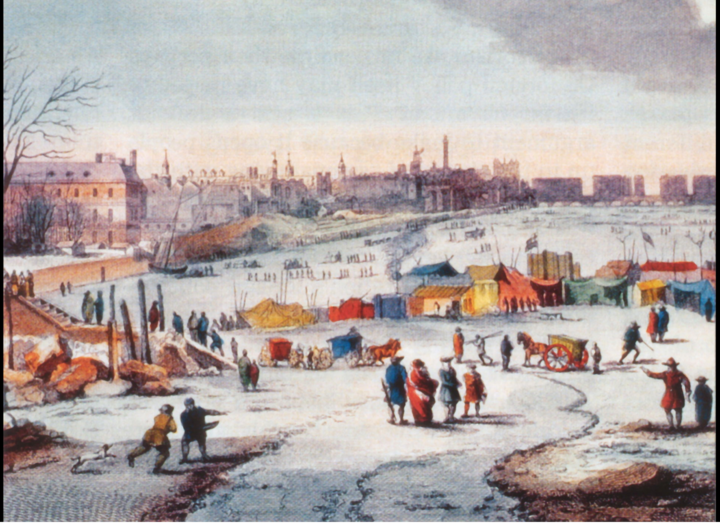
**A Frost Fair for Early Modernists: The Sixteenth Annual Harvard-Princeton Graduate Conference in Early Modern History**
**February 10-11, 2023**
**Organizers: Ann Blair and Tony Grafton**
All proceedings will be held both at Princeton, in Dickinson 211, and on Zoom, for audience members who cannot take part in person (and speakers who are testing positive). Each speaker will have exactly 25 minutes at his or her disposal. We strongly advise that talks last no more than 15 minutes each, to allow for as much discussion as possible.
Abstracts: see bottom of page
**FRIDAY FEBRUARY 10**
**2:30 –2:45 PM Self-Introductions**
**2:45-4:25 PM Session 1: Producing and Consuming Texts**
**Chair: Yaacob Dweck (PU)**
*Ashley Gonik (HU), All Turned Around: Directionality in Printed Tables*
*Deborah Thompson (HU), Writing with Many Pens: Book Technologies in the Judeo-Persian Miscellany JTSA MS 1403*
*Niki Dinenis (PU), Reading, drawing and becoming Lutheran: Three sixteenth-century lives in the margins*
*Kelly McCay (HU), The Bible in Shorthand, 1630–1700*
**4:25 -4:45 PM Coffee Break**
**4:45-6:25 PM** **Session 2: Tradition and Transformation in Early Modern France**
**Chair: David Bell (PU)**
*Therese Banks (HU), The Rhetoric of Crusade: Recuperation, Adaptation, and Instrumentalization in Early Modern French Literature*
*Sophie Wilkowske (HU), Forests in commercial society: naval timber procurement and early modern French economic thought*
*Joanna Hope Toohey (PU), Creating the French Revolutionary Ideal: Revolutionary Personhood in the Pantheonizations of Voltaire and Rousseau, 1791–1794*
*Stephanie Zgouridi (PU), “Our Present Generation is Ready to Annihilate Itself”: The Politics of Generation in the National Convention*
**7:00 PM Dinner**
**SATURDAY FEBRUARY 11**
**8:30-8:45 AM Breakfast**
**8:45 –10:25 AM Session 3: Practices of Everyday Life**
**Chair: Yair Mintzker**
*Maryam Patton (HU), Leading a Temporal Life: Astrological Manuals for the Everyday Ottoman*
*Anna Speyart (PU), On the Risks or Benefits of Drinking Cold in Early Modern Italy*
*Briana Brightly (HU), The Buddhist Craftsman: Artisanal Epistemology in Early Modern Tibet*
*Aleksander Musiał (PU), Vapours embodied: climate control and immersive experience inside Eastern European bathing architecture in the 1770s*
**10:25-10:40 AM Break**
**10:40 AM–12:20 PM Session 4: Surveying Lands and Societies**
**Hannah Marcus (HU)**
*Jonathan Baldoza (PU), Views From “Below the Winds”: Revisiting “Early Modern” Southeast Asia*
*Ori Ben-Shalom (HU), Insalubrious Environments: Malaria, History, and Political Reform in Enlightenment Tuscany*
*John White (PU), Ships, Seashells, and Ivories: Joseph Furttenbach and the Entanglement of Land and Sea in Early Modern European Collections*
*Cynthia Houng (PU), A Book of Values: Domenico Lenzi’s Specchio Umano (Mirror of Humanity)*
**12:20-1:00 PM Lunch**
**1:00 – 2:40 PM Session 5 Making and Managing Knowledge**
**Chair: Yonatan Glazer-Eytan (PU)**
*Lilly Datchev (PU), How Conversations about Antiquities Shaped Written Records of Them*
*Alex Garnick (HU), The New Science and the Arabic Corpus: Jacob Golius' Mathematical Studies*
*Jeonghun Choi (HU), Origin studies in early modern East Asia and Europe*
*Hannah Kaemmer (HU), “Imperfect and slow”: Engineers, the State, and the Fortification of England’s Empire*
**2:40-2:55 PM Break**
**2:55 – 4:10 PM Session 6 Making New Lives**
**Chair: Ann Blair (HU)**
*Will Theiss (PU), A New Autobiography of Justus Lipsius.*
*Mateo Montoya (HU), Godly Commerce: Traces of the Search for Profit on the Jesuit Reductions among the Guaraní*
*Austen Van Burns (PU), The state of nature and nurture: wild children from natural philosophy to the human sciences*
**4:10-4:20 PM Farewell and announcement of HU-PU XVII**
**HUPU 2023 abstracts (23: 12 HU and 11 PU)**
**Jonathan Baldoza (PU), Views From “Below the Winds”: Revisiting “Early Modern” Southeast Asia**
**A 17th century account of a Persian mission to Siam referred to the region we now call** Southeast Asia as the “lands below the winds.” Historians have employed this epithet to conceptualize an “early modern” framework applicable to the diverse but distinctly coherent region, networked by port cities facilitating the monsoon-oriented traffic of commodities and driving political, cultural, economic, and religious transformations starting in the 14th century. This presentation will first revisit configurations of “early modern” Southeast Asia—laying out the claims, questions, and problems raised by a category drawn from European historiography. Then, it will analyze a locally-commissioned 16th century text called the Boxer Codex, or the Manila Manuscript, which, in around 300 folios filled with colorful illustrations, depicted the wide gamut of inhabitants, resources, environments, creatures, deities, and myths of a seemingly integrated world “below the winds.”
**Therese Banks (HU), The Rhetoric of Crusade: Recuperation, Adaptation, and Instrumentalization in Early Modern French Literature**
This paper seeks to trace the recuperation, adaptation, and instrumentalization of crusade rhetoric and crusade narratives in sixteenth- and seventeenth-century French literature. In so doing, this paper will highlight how the resurrection of crusade rhetoric before, during, and after the French Wars of Religion (1562-1598) helped authors on both sides of the confessional divide articulate notions of what it meant to be “French” in a time when France was being torn apart by civil war. Specifically, Catholic poet Pierre de Ronsard’s *Discours des misères de ce temps* (1562) and its *Continuation* published the same year, as well as French Protestant poet Agrippa d’Aubigné’s epic *Les Tragiques* (1616), will anchor this analysis on either side of the Wars of Religion. Both of these texts use stories of the medieval Albigensian Crusade (1209-1229) to make their respective ideas of French community coherent and legible to their audiences. This paper will question why these texts play with time and violence simultaneously as they attempt to define different—if not opposite—notions of French community via a shared rhetoric of Crusade.
**Ori Ben-Shalom (HU), Insalubrious Environments: Malaria, History, and Political Reform in Enlightenment Tuscany**
My paper examines physician Giovanni Tagioni Tozzetti’s (1712-1783) journeys to Tuscany’s countryside to investigate the problem of “air insalubrity” in malaria-stricken regions. As a young man, Targioni, who wa a geologist, a botanist, a natural historian, and a librarian, set out to explore his homeland. In these voyages, his attention was drawn to the grim condition of the people of the Maremma Toscana, a marshland on the southern shore of the country that suffered tremendously from disease and depopulation. Almost two decades later, Targioni was called to provide an explanation for an epidemic of “fevers” that ravished in 1756 the Valdinievole, a vital valley between Florence and Pisa. In both instances, Targioni’s diagnosis leaned on historical analysis: he understood malaria as resulting from depopulation or mismanagement of natural resources, processes he attributed to erroneous political policies spanning from the Etruscan period to the Medici’s reign. Consequently, his suggestions on how to amend Tuscany’s problems passed through political reforms of natural resources, in which science had to have a leading role.
By studying Targioni’s intellectual world, I examine the juxtaposition of nature and history. I show how his vocation as a historian and librarian was central to his work as a physician. I then study the meanings of his historical explanation of political processes and situate them in the context of the political debates reverberating in mid-century Tuscany.
**Briana Brightly (HU), The Buddhist Craftsman: Artisanal Epistemology in Early-Modern Tibet**
What kind of knowledge is craft? How is it related to religious ways of knowing the world? This paper explores what it meant to be both an artisan and a Buddhist in early-modern Tibet. My project centers on Deumar Geshe Tenzin Phuntsok (b. 1672), a Buddhist monk who wrote a number of Tibet’s most authoritative treatises on medicine, painting, and craft. Through a study of his life and works, I argue that, for Deumar, craft knowledge constituted both a way of *doing* as well as a way of *being*: the skilled labor of making served the ethical formation of the artisan. In other words, Deumar wrote of craft not merely as a domain of knowledge, but rather a form of self-construction through which new subjectivities could emerge. As I will show, through both writing craft history and archiving practical knowledge, Deumar articulated his ideal vision of the Buddhist craftsman.
**Jeonghun Choi (HU), Origin studies in early modern East Asia and Europe**
The erudite Japanese scholar Nishimura Shigeki’s (1828-1902) unpublished notebook *Essays* (*Zuiken zuihitsu*) contains a few intriguing entries on the origins of objects in China, Japan, and the West. Though Nishimura appeared to directly cite extensive classics in East Asia and Europe, our close examination reveals that he quoted them from two main reference works: *The Records on the Origins of Objects* (*Shiwu jiyuan*, 1197) by Gao Cheng of Song China and *Portable Dictionary on Discoveries, Inventions, Introductions and Improvements* (*Hand-woordenboekje, ter aanwijzing van de ontdekking, uitvinding, invoering en verbetering*, 1850) by Hendrik Marinus Christiaan van Oosterzee (1806-1877) of the Netherlands.
While Nishimura’s notebook offers an example of connected history of two intellectual genealogies, it also prompts us to ask another question on history of the disconnected but comparable traditions: How did East Asian and European scholars manage information in their encyclopedias of origin studies in the early modern period? Nishimura’s notebook, I argue, should be understood as part of the long traditions of heurematography in Eurasia. Although Nishimura was not aware of it, Oosterzee’s *Portable Dictionary* reproduced knowledge on inventions of antiquity, which was circulating in the French, German, and Dutch publication world in the same period. And this tradition of compilation can be traced back to Polydore Vergil’s (c. 1470-1555) *On the Inventors of Everything* (*De rerum inventoribus*, 1499). Gao Cheng’s and Vergil’s encyclopedias registered a broad range of information based on classical texts, including the ones that attributed the beginning of some objects and practices to the mythical figures. Both encyclopedias had transnational impacts. Kaibara Ekken’s (1630-1714) *Origins of Objects in Japan and China* (*Wakan kotohajime*) and Hong Yangho’s (1724-1802) *Origins of Everything* (*Manmul wonshi*) not only rearranged Gao Cheng’s information based of Chinese sources, but also diversified the references by integrating Japanese and Korean texts. In the eighteenth century, the encyclopedias on the origins and inventions were also published in the literary spheres of France and Germany, with some local modifications. In this sense, the encyclopedias narrated transnational, if not transcontinental, history, before the nineteenth century. It was the convergence of the heurematography traditions in early modern East Asia and Europe that facilitated the amalgamation of them at the hands of Nishimura Shigeki and other East Asian scholars influenced by him.
**Lilly Datchev (PU), How Conversations about Antiquities Shaped Written Records of Them**
This paper is part of a dissertation chapter and a journal article (in progress). The question of this paper is: how and why did humanists begin describing antiquities on a larger scale and in greater detail starting in the 15th century? This question emerges from a comparison of humanist texts from Petrarch onward.
The answer I present is in two parts. First, I briefly show that humanists took part in a new custom that was developing in this period, which I call the antiquarian excursion. In this custom, groups of people examined antiquities together. These groups included governors, merchants, sailors, artisans, and rural laborers, besides humanists. They explored antiquities initially in Northern Italy and the Aegean region, and the custom was increasingly practiced after the 15th century.
Second, I show that the conversations that took place on these excursions helped transform humanists' written accounts of antiquities. Humanists were led by their companions to antiquities that had become unknown by the Renaissance: they were antiquities, such as prostrate columns and statues and coins that washed up in riverbeds, that were rarely, if at all, recorded in classical and medieval texts, and which had few, if any oral traditions about them. Being taken firsthand to such sites helped humanists greatly expand the scope of their studies. It also helped humanists begin to notice and record greater detail about each antiquity. Their companions pointed out various details to them, such as Greek and Latin inscriptions, sculpted figures, and facts of craftsmanship, which they noticed largely because of their different social and professional backgrounds. As humanists recorded these details, they began to break free from classical and medieval traditions of describing antiquities, such as *ekphrasis.* Now humanists prioritized in their writings the material objects themselves, in all their particularity, rather than the rhetorical eloquence of the passages they composed about the objects, or the loose historical associations about the objects they gathered from texts or oral traditions, or the moral significance of those historical associations.
**Niki Dinenis (PU), Reading, drawing and becoming Lutheran: Three sixteenth-century lives in the margins**
This paper compares the visual annotations of four Luther Bibles drawn by three citizens of Halle in the 1530s and 40s. Focusing on a particular time and place from three different perspectives, it seeks to illuminate varied experiences of religious change through the singular lens of marginalia.
When it comes to Bible reading in the early Reformation, more is assumed than known about its relationship to processes of conversion and the making of Lutheran devotional cultures and identities. Here, we see three lives in granular detail as they reorient themselves to new truths, practices, and loci of the sacred through reading, writing and drawing.
In ways similar but different to medieval prayer books, the first readers of Luther Bibles made the texts of scripture their own. They pasted in historical and devotional images, drew crosses, liturgical objects, and providential signs, turning the text into a personal archive of promises, prophecies, and admonitions that guided them through this life and the next. Through drawing and writing, they sought access to the sacred, meditated on death, suffering and resurrection, interrogated the inner recesses of their conscience and sought to read God’s will in the book of nature. It was through cultivating emotions in the process of reading both scripture and experience together, that these three people became Protestant.
This paper asks then both what did people do with their Bibles, but also what can marginalia tell us about the why and how of religious continuity and change from the perspective of ritual, practice and emotion? Finally, as a history of reading in the age of print it speaks to growing interest in visual forms of marginalia and to discussions on the relationship between manuscript and print cultures of reading and marking.
**Alex Garnick (HU), The New Science and the Arabic Corpus: Jacob Golius' Mathematical Studies**
This paper presents some work-in-progress on the Leiden scholar Jacob Golius (1596-1667). At once mathematician and Arabic philologist, the figure of Golius stands at pivotal juncture in the history of mathematics, between the recovery of Greek mathematics in the sixteenth century and amidst the formation of a new tradition of mathematics in the seventeenth. Though a humanist scholar in his output (preparing editions, translations, lexicons, etc.), Golius actively shaped the direction of the New Science. Based on a combination of archival and published sources—ranging from Golius' translations and marginal annotations of Arabic mathematical texts to his correspondence with savants like Gassendi, Constantijn Huygens, and Descartes—this talk explores how Golius actually read, and accommodated to contemporary concerns, the Arabic mathematical corpus that he collected from the Middle East and North Africa.
**Ashley Gonik (HU),** **All Turned Around: Directionality in Printed Tables**
Directionality is not straightforward in the printing process. Long texts are routinely broken up and distributed for simultaneous composition. For any formats smaller than folio, multiple pages on every sheet need to be flipped around according to the imposition pattern. The instability of direction is one of three potentially destabilizing forces that I discuss in my dissertation chapter “Unstable Tabular Forms.” In this paper, I will present findings from about two dozen examples of tables printed and/or bound in a different orientation than the presumed reading direction. I will assess whether certain genres and printers are more often affected, and I will determine the extent to which such off-kilter tables complicate the legibility and undermine the authoritative power of this diagrammatic form.
**Cynthia Houng (PU), A Book of Values: Domenico Lenzi’s Specchio Umano (Mirror of Humanity)**
What is Domenico Lenzi’s *Mirror of Humanity*? Often called *Il Libro del Biadiaolo,* or the *Book of the Grain Merchant,* after Lenzi’s profession, the *Mirror* is a 14th-century manuscript that contains a patchwork of genres–chronicles of events, snippets of poetry, lists of grain prices, and nine miniature paintings by the Master of the Dominican Effigies. The manuscript was created in Florence in the first half of the fourteenth-century, as a record of how Florence responded to a series of grain shortages that dogged the city during that time. Taken together, the grain prices and chronicles present an ideal of how a commune should act in times of crisis. Lenzi may have intended his book to serve as a guide to others, as a record of right behavior and appropriate values, illustrated with examples from the Florentine past. The gathering of prices in the *Grain Merchant’s Book* also served as a record of how well–or how poorly–Florence, as a city, shepherded its values, how well it functioned as sa community, and how closely the commune managed to hew to the values that it claimed to hold dear.
This paper will discuss the values that Lenzi hoped to convey as desirable, and the variety of representational strategies that he chose to present these ideals to his readers.
**Hannah Kaemmer (HU), “Imperfect and slow”: Engineers, the State, and the Fortification of England’s Empire**
Across England’s seventeenth-century empire, fortifications were integral to colonization, yet their design and construction was left largely to individual governors and corporations. In the midst of a broader centralization of imperial administration, however, the English state began to exert greater authority over these massive infrastructural projects and to consolidate control within a single government institution, the English Ordnance Office. Centralizing the construction of fortifications—complex systems of earth and stone, timber and water—proved challenging even within England, and those challenges multiplied in colonial sites with unfamiliar geographies, environments, materials, and cultural landscapes. This paper focuses on one of these colonial fortification projects—Fort Williams in St. John’s, Newfoundland (c. 1690-1700). Using engineers’ journals, letters, and drawings, it traces how Ordnance engineers and craftsmen attempted to construct a controlled, familiar, and secure colonial environment on the Canadian coast; in so doing, it shows the fundamental role of a state institution in remaking colonial territory into English architectural space.
**Kelly McCay (HU), The Bible in Shorthand, 1630–1700**
In 1630, the shorthand inventor Thomas Shelton offered a list of reasons to study the art of short-writing. One such reason, applicable to English merchants and travelers abroad, was that those travelers could own “whole Testaments and Bibles written by this Art, \[and\] vse them without feare or danger of bloudie Inquisitors.” As shorthand could not be read without extensive training or laborious decipherment, and as the invention was then particular to England, books written in shorthand would certainly have imparted a degree of security, though protection from “bloudie Inquisitors” rings as somewhat hyperbolic. In this paper, I will speak to the custom of printing and penning seventeenth-century Bibles (or Biblical books) in shorthand, a practice that was hardly as rare as auction-catalogues claim, but that has elicited very little scholarly investigation, nevertheless. I will begin by outlining the printed tradition, which consists of four different extant titles printed in at least eleven different editions from 1660 to the end of the century. I will speak particularly on their manner of publication (collaborative ventures funded by over 65 subscribers), on their physical properties, and on resemblances in binding styles that suggest that these books were marketed not only as objects of utility, but as objects of curiosity. I will then describe a selection of shorthand manuscripts that also contain books of the Bible, some of which were copied from printed exempla, others which were evidently original. Supplemented by contemporary references to these books (in shorthand manuals, private diaries, and miscellaneous material), I argue that both the printed and manuscript specimens served manifold purposes — the former as publicity materials and resources for advanced shorthand learners, the latter for private devotion. Emerging out of a primarily book-history-oriented study, I welcome the chance to share my research with peers and faculty far more conversant in early modern religious life than myself!
**Mateo Montoya (HU), Godly Commerce: Traces of the Search for Profit on the Jesuit Reductions among the Guaraní**
The Jesuits are often remembered for their dedication to education and the global impact of their work. In addition to this, however, historians have lauded them with the provocative title of “the first multinational corporation” and characterized them by their “particular interest in business.” Through an investigation of a 1728 manuscript commercial manual and a few other archival documents from the archives of the Jesuit reductions among the Guaraní in Paraguay, I will offer a mosaic of the aims to make profit on the reductions. Connecting these observations with broader themes prevalent on the reductions, I will consider the place of these aims in the overall project of the Jesuit reductions among the Guaraní.
**Aleksander Musiał (PU),** **Vapours embodied: climate control and immersive experience inside Eastern European bathing architecture in the 1770s**
Why would 18th-century architects tend to situate bathing suites alongside greenhouses, instead of domestic apartments? This seemingly marginal conundrum will unveil the rich dynamics of reinventing bathing design in the period, with particular attention paid to its lavish flourishing in Eastern Europe. Examples of an unprecedently self-conscious interest in atmosphere within man-made spaces will include selected architectural drawings and still surviving structures, together with theoretical writings approaching architecture as a function of landscape design. By drawing together designs for Catherine the Great’s ‘Ancient House’ in Tsarskoe Selo by Ch.-L. Clérisseau and Ch. Cameron, F.-X. Branicki’s underground apartment in Warsaw by S. Zug, and Kozyn spa in Ukraine, all realized in the same pivotal decade, I will explore how the network of Eastern European patrons, artists, and theorists responded to contemporary debates on atmosphere and *caractère* by deploying innovative means of shaping bodies and identities through architecture. This intervention was not restricted to contemporary physiological debates regarding the usefulness of either cold or hot baths. It contributed to the growing interest in deploying architectural space to transport subjects across time and space by orchestrating immersive experience aimed at their entertainment and instruction. Seeing how fabricating vapour atmosphere inside baths would facilitate such figurative immersion will help appreciate the emergence of the modern notion of interiority it informed.
**Maryam Patton (HU), Leading a Temporal Life: Astrological Manuals for the Everyday Ottoman**
Beginning in the mid-15th century, the Ottoman Empire began appointing official astrologers who held senior positions of office. This tradition continued into the 20th century until the final demise of the Ottoman state. One of the primary duties of the chief astrologer (müneccimbaşı) was to prepare the yearly almanac for the sultan and other senior officials that contained prophecies and predictions for the coming year. This concern and respect for astrology at the highest levels of imperial authority reflected a much more widespread interest in Ottoman society. Well before the office of the chief astrologer was established, scholars produced a rich body of astrological literature targeted toward lay audiences and everyday individuals. The vast numbers of surviving copies of these manuscripts illustrate their popularity. These texts were written in much simpler Turkish with less technical astronomy and presented guides to living in temporal harmony with the heavens. With advice on the best times to perform everyday activities, these manuals offered a relatively structured view of quotidian life. In this paper, I examine some of this literature to outline how a temporally minded Ottoman of the 15–16th centuries might have led their life.
**Anna Speyart (PU), On the Risks or Benefits of Drinking Cold in Early Modern Italy**
Italians of all classes developed a penchant for snow-chilled drinks in the sixteenth and seventeenth centuries. Contemporary physicians could not resist commenting on this new fashion and a fierce debate erupted on the health benefits or risks of consuming chilled drinks. My paper analyses the stakes and strategies involved in the cold drinking debates, which kept the medical republic of letters occupied for nearly a century from the 1550s onwards. More than a dozen Italian authors argued the pros and cons of snowy drinks with increasing nuance. Mobilizing their humanist skills, both proponents and critics of chilled beverages appealed to ancient precedents to argue their case. Some polemicists also cited contemporary events, such as plague, as evidence for the damage or good chilled drinks could do. As these print debates reveal, the interests of humanist scholarship, medicine, public health, taste, diet, and commerce were hopelessly entangled around chilled consumables.
**Will Theiss (PU), A New Autobiography of Justus Lipsius.**
The papers of Justus Lipsius (1547-1606) are made up of piles of reading notes, annotated books, letters, and drafts of published and unpublished works in the library of the University of Leiden. This paper presents fragments from this archive, including of an unpublished autobiography of the chameleon-like philosopher and historian. But it does so less as an end in itself than as a step toward interrogating the project of autobiography and the task of writing about the self in the Catholic Reformation.
**Deborah Thompson (HU), Writing with Many Pens: Book Technologies in the Judeo-Persian Miscellany JTSA MS 1403**
At the dawn of mechanized print, Jewish printers employed a variety of Hebrew terms to name the new technology including the Talmudic phrase "writing with many pens". This phrase remains an apt metaphor for the multiple and synchronous ways in which manuscripts and books were produced in Edot HaMizrah (Jewish communities of the Middle East) in the 18th and 19th centuries. The miscellany of JTSA MS 1403 was produced in part locally, in Iran, and in part by Jewish printers abroad, and includes a range of religious texts in Judeo-Persian bound together such as a haggadah, biblical commentaries, and prayers. MS 1403 represents a microcosm of Jewish book production in Iran during this period, bears witness to multiple writing and printing technologies employed by Jews within an Islamic context, and redefines the relationship between manuscript and print.
**Joanna Hope Toohey (PU), Creating the French Revolutionary Ideal: Revolutionary Personhood in the Pantheonizations of Voltaire and Rousseau, 1791–1794**
In two Parisian festivals in July 1791 and October 1794, French revolutionaries interred the remains of Enlightenment philosophers Voltaire and Rousseau in the recently-created Panthéon, formerly the church of Saint Geneviève and now a mausoleum for the “great men” (*grands hommes*) of revolutionary France. These festival processions—marchers dressed in Roman costume, elaborate chariots transporting the great men’s remains, and long successions of deputations carrying revolutionary symbols, all moving slowly across Paris to the Panthéon—give a vivid impression of the revolutionaries’ reverence for the Enlightenment *philosophes*. Yet the festivals’ underlying tensions raise the question of what relationship their organizers saw between the Enlightenment’s *grands hommes* and themselves. In pursuing that question, this paper contributes to scholarship on the early modern French cult of great men, French revolutionary festivals, and the individual experience of revolutionary upheaval in the wider Age of Revolutions. It argues that the pantheonizations of Voltaire and Rousseau presented a model of revolutionary personhood that centered the festivals, in interesting and subtle ways, more on the revolutionaries conferring the status of grands hommes than on the philosophes themselves. The main characteristics of this model included: the potential for achievement without reliance on traditional religion; the glorification of the self-sacrificial revolutionary hero; the emphasis on perfectibility; and the prioritization of public over private virtue. French revolutionaries believed that, through emulation, they might equal or surpass figures such as Voltaire and Rousseau. Thus, the total effect of these pantheonizations was not only the apotheosis—the exaltation to semi-divine status—of Enlightenment philosophes who had paved the way for the French Revolution. The festivals also represented, in their veneration of the Revolution’s forebears, the sacralization of a distinct model of revolutionary personhood, one through which French revolutionaries might achieve such an apotheosis for themselves.
**Austen Van Burns (PU), The state of nature and nurture: wild children from natural philosophy to the human sciences**
During the second half of the seventeenth century, discussion had begun to swirl around the specifics of the “state of nature.” The big questions of the era – the influence of Providence, the proper organization of society, the most just form of government – hinged on humans’ “natural” position(s) within the world. As the seventeenth century rolled into the eighteenth, the question of man’s position in nature continued to be a moral, religious, and natural-philosophical one, but ways of arguing about it increasingly relied on systemized, perceivable evidence. This change posed a question: what experiment could prove a philosophy?
At once unique and universalizable, strangely aloof but manifestly real, wild children were the perfect answer. At least six appeared in Europe between 1700 and 1828, with the three most famous cases (Peter, Marie-Angélique, and Victor) subjected to intense press scrutiny, experimentation, and periods of public display. Of course, it could not be confirmed that any of the wild children had been raised by animals, nor was it certain that their wildness had been *caused* by their isolation rather than being the *cause of* it. But their behavior seemed proof enough. Here was man, untamed.
Showing that wild children were more “self” than many of the Enlightenment’s other Others, I argue that their way of generating knowledge proved surprisingly flexible. Thus, although their emblematic cluster of attributes emerged during the eighteenth century, they remained relevant for testing the edges of humanity well past the rise of the modern human sciences.
**John White (PU), Ships, Seashells, and Ivories: Joseph Furttenbach and the Entanglement of Land and Sea in Early Modern European Collections**
In recent years, scholars have turned our attention to the often- neglected role of the ocean in humanistic and planetary histories. For example, Byron Hamann has written that many disciplines, including his own discipline of art history, have transformed seas and oceans into “voids,” while Steve Mentz has argued that theories of globalization “must become oceanic rather than merely terrestrial.”[\[1\]](https://emworkshop.fas.harvard.edu/conferences#_ftn1)
This paper will demonstrate the entanglement of land and sea in early modern Europe by highlighting the work of one figure: Joseph Furttenbach (1591-1667). An architect, mathematician, set designer, and merchant who also dabbled in pyrotechnics and maintained a *Kunstkammer*, Furttenbach is a multifaceted and understudied figure. Particularly understudied is a 1629 shipbuilding treatise, *Architectura Navalis*, in which he illustrated not only ships but also sea creatures. An edition of the treatise held in Princeton University’s Special Collections forms the basis of my ongoing research.
I will argue that *Architectura Navalis* must be seen as co-constitutive with the other aspects of Furttenbach’s work, especially his *Kunstkammer*, which included seashells, corals, and ivories. In particular, I will zoom in on the illustration in *Architectura Navalis* of a sea creature with ivory tusks in order to reflect on the ambivalence and amphibiousness of ivory in early modern Europe. Ivory, often associated with elephants, was known in early modern Europe also to come from the sea, such as from the narwhal, the tusks of which appeared in many *Kunstkammern*. However, these long, spiraled tusks at least until the mid-seventeenth century typically were passed off as the horns of unicorns—animals that were not so much terrestrial as fantastical. I will connect Furttenbach’s work to early modern natural historical texts to argue that the example of ivory reveals the particular entanglement for early modern Europe of the land with the sea, the latter of which often is neglected in scholarship.
**Sophie Wilkowske (HU), Forests in commercial society: naval timber procurement and early modern French economic thought**
In the seventeenth and eighteenth centuries, powerful Western European states engaged in projects of military and commercial expansion that re-ordered their own polities and re-drew global maps of sovereignty and circulation. Ships were the fundamental technology that enabled these epochal processes of military mobilization and economic integration. As demand for specialized naval and merchant ships grew, though, questions about how to secure sufficient capital and supplies of the scarce natural resources their construction required became pressing. In France, officials, financiers, merchants, and workers developed strategies that blurred distinctions between public and private economic life to turn forest products like timber, tar, and hemp into fleets of ships. By reconstructing a detailed economic history of how forests were transformed into sea power in Old Regime France, my dissertation will shed new light on interacting military, environmental, and economic transformations on the eve of the modern period.
In this talk, I focus in particular on how the history of timber provisioning might change our understanding of early modern French economic thought. I highlight two aspects of the social and political life of this economic process. First, discussions of timber increasingly used a language of scarcity over the period studied. By following shifting representations of markets for forest products, I aim to explore how natural resource extraction and exhaustion was (or was not) grasped in economic thought, especially with regard to national, international, and colonial geographies. Second, the French state entered the provisioning process at various points and in different roles. Closely tracking contemporary polemical and strategic discussions of naval timber provisioning will let me reconstruct how contemporaries understood the "state" in the "market" in a time when distinctions between these two realms were far from clear. In sum, I hope to help bring experiences of resource depletion and the unwieldy nature of the premodern state to bear on a significant period in the history of economic thought.
**Stephanie Zgouridi (PU), “Our Present Generation is Ready to Annihilate Itself”**[**\[2\]**](https://emworkshop.fas.harvard.edu/conferences#_ftn2)**:**
**The Politics of Generation in the National Convention**
In February of 1793, the Girondins introduced their proposal for a new national constitution, accompanied by a *déclaration des droits naturels,* *civiles, et politiques des hommes*, to the floor of Revolutionary France’s National Convention. The last article of the *déclaration*, article 33, stated, “A people always has the right to review, reform, and change its Constitution. A generation does not have the right to subject future generations to its Laws; and all heredity in functions is absurd and tyrannical.”[\[3\]](https://emworkshop.fas.harvard.edu/conferences#_ftn3) For a fledgling nation deeply concerned with questions of equality, the problem of generations was that they exhorted equality not only across space, but also across time. Using article 33 and its attendant discussions as my foundation, I argue that the notion of generations helped *conventionnels* to develop a more robust politics of sacrifice and a sharper politics of the future—one wherein the mechanism of self-sacrifice and self-annihilation was, paradoxically, the only guarantee of stability in national government. The power of this new self-sacrificial, future-oriented politics, I contend, was best demonstrated by the fact that it was shared across all factions of the National Convention, from the Girondins to the Jacobins. The downfall of the Girondins in June of 1793, after all, did not mean the downfall of article 33, which lived on untouched in the constitution of their Jacobin enemies.
[\[1\]](https://emworkshop.fas.harvard.edu/conferences#_ftnref1) Byron Ellsworth Hamann, “Fieldnotes from Solaris: Ship’s Logs, Shipwrecks, and Salt Water as Medium,” *Grey Room* 85 (Fall 2021), 103 and Steve Mentz, *Shipwreck Modernity: Ecologies of Globalization, 1550-1719* (Minneapolis: University of Minnesota Press, 2015), xxi.
[\[2\]](https://emworkshop.fas.harvard.edu/conferences#_ftnref2)
[\[3\]](https://emworkshop.fas.harvard.edu/conferences#_ftnref3)
### Harvard-Princeton 2022 expand\_more

Crispijn van de Passe, The Muse Clio, betw 1589 and 1611. Rijksmuseum, Amsterdam
**The Fifteenth Annual Harvard-Princeton Graduate Conference in Early Modern History**
**February 18-20, 2022**
**Organizers: Ann Blair and Tony Grafton; Zoom guru: Anja-Silvia Goeing**
*All proceedings will be held on Zoom, based at Harvard. Each speaker will have exactly 25 minutes at his or her disposal. We strongly advise that talks last no more than 15 minutes each, to allow for as much discussion as possible.*
**Friday February 18, 1-4:50pm**
*1-1:15pm introductions*
***1:15 -2:30pm*** **Religion, chaired by Hannah Marcus, HU**
Min Tae Cha, PU, From Reformation to Reform: Church Government and Constitutional Reform, 1560-1832
Ozkan Karabulut, HU, Spatiality and Architecture in Kizilbash-Alevi Communities in the Early Modern Anatolia
Spencer Weinreich, PU, Prisoner's Progress, or a User's Guide to a Solitary Cell
*2:30-2:50 2 rounds of speaker Breakout Rooms*
***2:50 -4:30pm*** **Economic life, chaired by Tony Grafton, PU**
Stephanie Leitzel, HU, Coordinating Color across the Mediterranean: Medici merchants, Mediterranean dye markets, and the exchange of colored cloth in the late Middle Ages
Sama Mammadova, HU, The Common Good: Public Banks, Renaissance Cities, and Franciscan Moral Economy
James Almeida, HU, Consuming the *Negros*: Race and Commodification in Early Andean Silver Mints
Jin-Woo Choi, PU, Venice on Ice: The Frozen Lagoon as Chronicle of Winters Past, 1431-1796
*4:30 – 4:50 2 rounds of speaker Breakout Rooms*
**Saturday February 19, 8:55am-1:25pm**
***8:55 – 10:10am*** **18th century, chaired by David Armitage, HU**
Jeremy Schneider, PU, Lost Shell Forms from Rococo to the Garden
Aleksander Musiał, PU, Defamiliarizing the antique: paper archaeology and grotesque orientalization inside the Pompeian room of Łańcut castle’s Chinese apartment
Netta Green, PU, Family and Polity: A Metaphorical Divorce
*10:10-10:30 2 rounds of speaker Breakout Rooms*
***10:30-11:30am*** **behind the scenes of co-edited volumes**, **chaired by Jim Hankins, HU**
featuring the co-editors of:
Nathanael Aschenbrenner and Jake Ransohoff eds., *The Invention of Byzantium in early modern Europe (2021)*
Ann Blair and Nicholas Popper eds., *New Horizons for Early Modern European Scholarship* (2021)
*11:30-11:50 2 rounds of speaker Breakout Rooms*
***11:50 – 1:05 Humanism*****, chaired by Leah Whittington, HU**
Lilly Datchev, PU, How Humanists Began Drawing Antiquities
Konrad Boeschenstein, HU, Juan Ginés de Sepúlveda and Aristotle's Theory of Natural Slavery: New Readings of the *Politics* in the Light of Old Readings of the *Nicomachean Ethics*
Mateusz Falkowski, PU, Humanism in Action. Antonio Agustín, Note-taking, and the Council of Trent
*1:05-1:25 2 rounds of speaker Breakout Rooms*
**Sunday February 20, 8:30am-12:50pm**
***8:30 –9:45am*** **Alumni panel: behind the scenes** **of finishing a book and finding a next project**, **chaired by** **David Bell, PU**
John Gagné, *Milan Undone: contested sovereignties in the Italian wars* (2021)
Margaret Schotte, *Sailing School: navigating science and skill* (2019)
Alex Bevilacqua, *The Republic of Arabic Letters: Islam and the European Enlightenment* (2018)
*9:45-10:05 2 rounds of speaker Breakout Rooms*
***10:05-11:20am*** **Printing, chaired by Jenny Rampling, PU**
Ashley Gonik, HU, A Sine of the Times: Printed Series of Quantitative Tables across Europe
Sergio Leos, HU, “*Americae Sive Novi Orbis*:” ‘America’ in Maps and Allegorical Depictions
Kelly Minot McCay, HU, “Let vs Inglish not be ashamed”: The Sociolinguistic Motivations for Spelling Reform in Early Modern England
*11:20 – 11:45 two rounds of speaker Breakout Rooms*
***11:45am-12:35pm*** **Art, chaired by Carolina Mangone, PU**
Cynthia Houng, PU, Words on Art: Neither Criticism Nor Theory, Writing on Art in Renaissance Florence
Will Theiss, PU, Painted Stars in Late Medieval Cologne: Frame, Realism, Craftsmanship
*12:35pm* *one round of speaker Breakout Rooms*
*Then as many more rounds of breakout rooms as people remain present for.*
*Heartfelt thanks to: the History Departments of Princeton and Harvard Universities, especially to Anja-Silvia Goeing.*
### Harvard-Princeton 2021 expand\_more
## **Prisoners and Players, Merchants and Ministers: An Early Modern Fair**

### **The Fourteenth Annual Harvard-Princeton Graduate Conference in Early Modern History**
### **February 12-14, 2021**
### **Organizers: Ann Blair and Tony Grafton**
*All proceedings will be held on Zoom, based at Princeton. Each speaker will have exactly 25 minutes at his or her disposal. We strongly advise that talks last no more than 15 minutes each, to allow for as much discussion as possible.*
### **Friday February 12**
*12:30 – 12:45 introductions*
***12:45-2:00 Creating and Experiencing Structures, chaired by David Armitage***
Hannah Kaemmer, *“Perfect in Architecture, Civil and Military”: Locating Fortification Building in the English Board of Ordnance*
Aleksander Musial, *Springs of Decay: architectural lability and automatization of pleasure inside Pińczów Bathhouse in Lesser Poland, ca. 1610*
Spencer Weinreich, *The Illusion of James Nayler, or Memories of Madness*
*2-2:20 Speaker Breakout Rooms*
***2:20 -4:00 PM Ordering Nature, chaired by Jennifer Rampling***
Iman Darwish, *The Many Books of Simples: Material Organization in the Arabic Tradition of Materia Medica, 12th-16th Centuries*
Jin-Woo Choi, *Meteors in Paracelsian Cosmology and Medicine*
Wesley Viner, *Henry Howard’s Natural Philosophy: Eclectic Aristotelianism and Vernacular Humanism in Sixteenth-Century England*
Jeremy Schneider, *The rhetorical construction of extinction by Bernard Palissy*
*4:00 – 4:10 Speaker Breakout Rooms*
### ***Saturday February 13***
***8:50 – 10:30*** ***Homo ludens, chaired by Leah Whittington***
Kirsten Burke, *The Art of the Early Modern Playing Card*
Ekaterina Pukhovaia, *Courtly encounters in early modern Yemen before and after the Ottomans (15th-17th centuries)*
Benjamin Bernard, *René de Ceriziers’* Jonathas ou le vray amy *(1645) and the ethics of friendship at the Jesuit collège 1629-8*8
Matthew McDonald, *Fashion and the Evolution of French, 1750s–1780s*
*10:30-11:00 Speaker Breakout Rooms followed by faculty breakout rooms*
***11:00 – 12:40 Readers, Writers and Printers, chaired by Hannah Marcus***
Mateusz Falkowski, *Two Men and a Book. A tale of the extraordinary copy of Antonio Agustín’s* Diálogos de Medallas, inscriciones y otras antigüedades *(1587)*
Nikianna Dinenis, *Believers in Households: The Library of Felicitas von Selmnitz and Religious Reading in the Reformation Home*
Ashley Gonik, *Calendar as Category in Print, ca. 1450–1600*
Kelly Minot McCay, *‘New,’ ‘True,’ and ‘Secrete’: The Re-Invention of Writing in Early Modern England*
*12:40-1:30 speaker breakout rooms then Lunch on your own*
***1:30 – 2:30 Book Event***
*An Experimental Inquisition? Hannah Marcus and Jennifer Rampling in conversation with Ann Blair and Anthony Grafton*
Hannah Marcus, *Forbidden Knowledge: Medicine, Science and Censorship in Early Modern Italy*
Jennifer Rampling, *The Experimental Fire: Inventing English Alchemy, 1300-1700*
[*Registration Link*](https://princeton.zoom.us/meeting/register/tJAqdOivqT4sE9GKiDdcAzvmrRrWp9ONw7J4)
*2:40-3:00 2 rounds of optional Breakout Rooms (including non HUPU participants who will attend the book event)*
### **Sunday February 14**
***8:30-9:45*** ***Order and Disorder I, chaired by David Bell***
Ryan Low, *Illuminating the Jewish Households of Fifteenth-Century Regensburg*
Maryam Patton, *Turkish Hours, Venetian Days: The Fondaco dei Turchi and Regulating Time for the Other*
James Almeida, *Libertine Slaves and Thieving Wage Workers: Rethinking Labor in Late Colonial Lima’s Mint*
*9:45-10 Break (speaker breakout rooms)*
***10:00-10:50 Order and Disorder II, chaired by Yair Mintzker***
Netta Green, *All Happy Families are Alike? Kinship, Statistics and Regional Variation during Napoleon’s Consulate*
Felice Physioc, *The Monetization of South-Central Andean Indigenous Treasuries in the Seventeenth Century*
*10:50-11: 20am Break (speaker breakout rooms then faculty breakout rooms)*
***11:20am-12:35pm*** ***Histories of belief and practice, chaired by James Hankins***
Lilly Datchev, *How Early Humanists Learned from Merchants*
Madeline McMahon, *A Counter-Reformation Bishop in the Enlightenment*
William Theiss, *German Church Books: Research methods and questions*
*12:35pm As many rounds of* *Breakout Rooms as people remain present for*
*Heartfelt thanks to: the History Departments of Princeton and Harvard Universities, especially the Center for Collaborative History and Jennifer Loessy.*
### Harvard-Princeton 2020 expand\_more
**From Extracting Treasure to Creating Knowledge: Early Modernities**

From the title page of Jeremias Drexel, *Aurifodina* (1643)
The Thirteenth Annual Harvard-Princeton
Graduate Conference in Early Modern History
February 14-15, 2020
in CGIS S020 and Robinson Hall Hist Dept Conf Room
Harvard University
**Friday, February 14, 2020:** ***in CGIS S020, 1730 Cambridge St***
**Brief welcome : Ann Blair (HU)**
**Session 1 (1:30-3:10pm) Rebuilding Christianity**
**Chair: Hannah Marcus (HU)**
-Niki Dinenis (PU), Mothers and Sons: The Devotional Lives of Families in the early Reformation
-Madeline McMahon (PU), Theorizing Public Prayer in Tridentine Italy
-Aaron Stamper (PU), Spiritual Barrenderos: Jesuits Sweep the Streets of Granada
-William Theiss (PU), *Animi mei penetralia*: Patristics, Jesuits and Death in Sixteenth-Century Cologne
*Coffee Break 3:10-3:30pm*
**Session 2 (3:30-5:10pm) Producing Texts**
**Chair: Paris Spies-Gans (HU)**
-Ashley Gonik (HU), Angles and Angels: Investigating the Range of Printed Tables in Early Modern Europe
-Kirsten Burke (HU), Johann Neudörffer and the Writing Masters of Renaissance Germany
-Zixuan (Roxanne) Cai (HU and Peking U), Amended Woodblocks of a Chinese Compilation: *Old Records of the Capital* (1688)
-Richard Spiegel (PU), The Virtue of Invisibility: Bureaucratic Work and Intellectual Style in the 19th-Century German Research University
*Coffee Break 5:10-5:30pm*
**Session 3 (5:30-7:10pm) Pursuing Erudition**
**Chair: Jenny Rampling (PU)**
-Aleksander Musiał (PU), The Shipwreck of Antiquity: seafaring metaphor and limits of retrospection in early modern antiquarian discourse
-Lilly Datchev (PU), Relics and Antiquarian Scholarship in Renaissance Italy
-Jeremy Schneider (PU), Leviathan and the Lectern
-Richard Calis (PU), The Making of Medieval Italy: Evidence and Erudition in the Age of Ludovico Antonio Muratori (1672-1750)
**Saturday, February 15, 2020:** ***in Robinson Hall, Hist Dept Conf Rm***
***Modest breakfast foods in the Great Space from 8:30 am***
**Session 4 (9:00-10:40am) Crossing Borders**
**Chair: Alex Bevilacqua (Williams College)**
-Paul Babinski (PU), "Come to our house without ceremony": Adam Olearius in Shamakhi
-Constantine Theodoridis (PU), “Turkish Captivity" between North Africa and the Dutch Atlantic (1600-1680)
-Sally Hayes (HU), The Classical Roots of Black Corporate Life in Seventeenth-Century Lima
-James Almeida (HU), “Recoining the Inca? Andean Structure and Inca Legacies in Potosí’s Colonial Silver Mint”
*Coffee Break 10:40-11:00am*
**Session 5 (11:00-12:40pm) Practicing Histories**
**Chair: David Armitage (HU)**
-Maryam Patton (HU), Heavenly Asynchrony: Ottoman Temporalities, the Islamic Calendar, and the Medrese Curriculum
-Ekaterina (Kate) Pukhovaia (PU), Early modern Zaydi historiography and state transformation in Yemen
-Megan Baumhammer (PU), Wandering through *l’Orto dei Semplici*: knowledge practices in the botanical garden at Padua in the 17th ct
-Genie Yoo (PU), The Life-Span of Natural-Historical Information in the Dutch East Indies
*Lunch in the Great Space 12:40-1:30pm*
**Session 6 (1:30-2:50pm) Enlightenment?**
**Chair: David Bell**
-Ben Bernard (PU), Posthumous optimism in poor taste? Claude-Pierre Patu, Voltaire's 'âme candide,' refits Charles Batteux for the stage
-Louis Gerdelan (HU), Catastrophes beyond *Candide*: disaster investigation in the mid-eighteenth century Atlantic world
-Matthew McDonald (PU), A French Archipelago: Linguistic Contestations in Francophone Europe, 1750–1789
**Envoi: Tony Grafton (PU**)
### Harvard-Princeton 2019 expand\_more
**Harvard-Princeton Graduate Workshop on Early Modern History, 2019**
Princeton University, February 15-16, 2019
Organized by Ann Blair (Harvard) and Tony Grafton (Princeton)
All sessions will take place in 211 Dickinson Hall, Princeton. Coffee on the 15th and breakfast, coffee and lunch on the 16th will be provided in 210 Dickinson Hall.
Each speaker will have thirty minutes at his or her disposal. Experience has shown that the most profitable way to use this time is to speak for fifteen minutes and leave the other fifteen minutes for discussion. Speakers are strongly urged to follow this model, and cautioned that those who speak longer than a quarter of an hour will have the discussions of their papers abridged.
***Friday, February 15***
***2:00-4:00 Session I: Gender, Servitude, and Agency***
***Moderator: Tony Grafton***
Genie Yoo (Princeton), Clues in recipes and verses: rethinking gender in the transmission Malay-language books of medicine and the mediation of natural knowledge in the Dutch East Indies
Sally Hayes (Harvard), “The Brothers Don’t Work”: Black Women Leaders of Lay Confraternities in Seventeenth-Century Lima
Sonia Tycko (Harvard), "Compulsory Service in Early Modern England"
Joseph la Hausse de Lalouvière (Harvard), “Slavery and the Making of Legal Rights in the French Caribbean and Guiana, 1803–1848”
***Break: 4-4:30***
***4:30-5:30 Session II: Book and Cross-cultural exchange***
***Moderator: Hannah Marcus***
Shireen Hamza (Harvard), Stretching the Body: Preparing to Travel in the Indian Ocean World
Richard Calis (Princeton), Early Modern Codicology: The Case of Martin Crusius (1526-1607)
***Dinner: TBA***
***Saturday, February 16***
***Breakfast 210 Dickinson 8:30-9:00***
***9:00-10:00 Session 3: Makers and markets***
***Moderator: Pier Mattia Tommasino***
Stephanie Leitzel (Harvard), Economies of Color: Dyes, Global Commerce, and the Fate of Italian textile industries
Cynthia Houng (Princeton), How to Invest in Art: Giulio Mancini’s *Considerations on Painting*
***Coffee Break 210 Dickinson 10:00-10:30***
***10:30-12 Session 4: Enlightenments***
***Moderator: Yair Mintzker***
Louis Gerdelan (Harvard), Disaster collectors in the mid-seventeenth century Atlantic world
Benjamin Bernard (Princeton), **The Hennin Circle reads Montesquieu: Materialism, moralistes, and homosociability in Enlightenment francosphere culture**
Richard Spiegel (Princeton), "Moral Education and Curricular Reform in 19th-Century Saxony"
***Lunch 210 Dickinson 12:00-1:00***
***1:00-2:00pm Session 5: Record-keeping and the law***
***Moderator: Ann Blair***
Min Tae Cha (Princeton), The Legacy of Canon Law in Scottish Jurisprudence, c.1680-c.1830: The Question of Church Property
Netta Green (Princeton), *Le Livre de raison* and Familial Governmentality*:* Record keeping in Early Modern Households
### Harvard-Princeton 2018 expand\_more
## The Twelfth Annual Harvard-Princeton
Graduate Conference in
Early Modern History
February 9-10, 2018
Robinson Hall, Lower Library
Harvard University
35 Quincy Street
Cambridge, MA
**Friday, February 9, 2018**
**Welcome: Ann Blair**
**Session 1: 1:30pm-3:30pm Cultures of learning**
**Chair: Hannah Marcus (History of Science, Harvard)**
Alex Schultz (Classics, Harvard)
The Alexandrian Mouseion in the Third Century and the Anatomy of an Institution
Graeme Reynolds (HEAL, Harvard)
Idealized Types: Ideologies of Printing Technology in the Chosŏn Dynasty
Maddy McMahon (Princeton)
Carlo Sigonio's De episcopis Bononiensibus and Religious Bodies in Motion in Gabriele Paleotti's Bologna
Christian Flow (Princeton)
Timing Philological Work
*Coffee Break 3:30-4:00*
**Session 2: 4:00pm-6:00pm Governing and Controlling**
**Chair: Tony Grafton (Princeton)**
Nate Aschenbrenner (Harvard)
The Empire Strikes Back: The Fall of Constantinople and the Rise of the Imperium Orientale
Ben Bernard (Princeton)
The sodomy consultant of early modern Paris: moral authority, sexuality, and the Collège
Miles Macallister (Princeton)
The Necessary Nine Years War: Legitimating Taxation after the Glorious Revolution
Julia Stone (Princeton)
The Case of the ‘Illegal, But Not Immoral or Fattening Cheese Cake’: Why Dr. Robert C. Atkins Recommended a Banned Substance for Healthy Living
**Saturday, February 10, 2018**
***Modest breakfast foods in the Great Space from 8:30 am***
**Session 3: 9:30am-11:00am Colonial dynamics**
**Chair: David Armitage (Harvard)**
James Almeida (Harvard)
Minting Society: Labor and Race in Potosí, 1570-1800
Benjamin Sacks (Princeton)
Networking: City-Planning Dynasties in the English and French Atlantic, 1670-1740
Mariusz Kaczka (European University Institute, Florence)
The King’s Will and the Diplomat’s Craft: Forging Borders in the ‘Polish Indies’ in the Eighteenth Century
*Coffee Break 11:00-11:30*
**Session 4: 11:30am-12:30pm** **Social signaling**
**Chair: David Bell (Princeton)**
Astrid Pajur (Uppsala University)
Materiality and Meaning: Clothing and Social Practices in the seventeenth-century Swedish Baltic Empire
Matthew McDonald (Princeton)
Splendor and Sociability: Charting the French Cosmopolis in 18th-Century Berlin
*Lunch in the Great Space 12:30-1:30*
**Session 5: 1:30pm-3:00pm Forms of attention to nature**
**Chair:** **Jenny Rampling (Princeton)**
Jinsong Guo (Princeton)
Imperial Astronomer and Master Communicator: Contextualizing Ferdinand Verbiest’s (1623-1688) Typi Eclipsis
Sarah Bramao-Ramos (EALC, Harvard)
Speaking of The Manchu Anatomy: Translated pages and page layouts in translation
Kit Heintzman (History of Science, Harvard)
Pour one out for my fallen ponies: The ethics of equine death in the ancien régime
## ABSTRACTS
HUPU abstracts Feb 2018
James Almeida, Harvard
**Minting Society: Labor and Race in Potosí, 1570-1800**
Economic historians have long recognized that the silver mine of Potosí in Upper Peru (modern Bolivia) was the engine that drove the Spanish Empire. The world’s largest and longest-producing silver mine fueled the global reach of Spanish silver with support from refineries and a silver mint in the urban center. While miners notoriously employed Indians from across the Andes in a rotating system of forced labor known as the *mita*, preliminary research suggests that African slavery played a much more important role in the silver economy than heretofore realized. The goal of my research is to explain why these slaves were brought to Potosí, given the availability of indigenous laborers; why they remained central to silver extraction; and to explore the implications of having a mixed-race and mixed-status labor force (enslaved, free, and subjected to various states of dependency in the form of draft labor, convict labor, or lifetime servitude) in social differentiation and the creation of what we would now term race. This dissertation prospectus proposes to answer these questions by examining the discourse and logistics of importing slaves and labor management and organization through employment records, labor disputes, official correspondence, wills, and other records generated between 1570 and 1800 and housed in archives in Bolivia, Peru, and Spain. My hypothesis is that Spanish colonists brought enslaved Africans to Potosí because they believed their inability to blend in would make them easy to control; but that the mint served as a site of social reproduction that challenged official expectations about racial hierarchies and blurred the lines between races and slave or free.
Nate Aschenbrenner, Harvard
**The Empire Strikes Back: The Fall of Constantinople and the Rise of the** ***Imperium Orientale***
This paper examines the semantic transformations in references to Constantinople that emerge in the extensive anti-Turkish oratory produced after Ottoman conquest of the city in 1453. While the city had previously been chiefly identified as the capital of the “empire of the Greeks,” after the conquest orators and writers increasingly view it as the “seat of eastern empire.” This crucial ideological move, which has not yet received much attention, reshaped late medieval imperial discourse. By redefining the imperial nature of Constantinople and making it locus of the *imperium orientale*, these orators fashioned a conceptual bridge back to the Roman empire of late antiquity and thus re-Romanized the imperial city of Constantinople. This transformation, after centuries of emphasis on the Roman empire’s translation to the Franks under Charlemagne, not only had ideological consequences, but was part of a broader network of cultural and political strategies employed to galvanize support for collective military action against the Ottomans. By examining the oratorical efforts of humanists like Aeneas Sylvius Piccolomini and Bernardo Giustiniani, and Byzantine emigrés like Cardinal Bessarion and Michael Apostoles, we can see how the fall of Constantinople transformed the language of empire in the fifteenth century, and furnished new strategies for political action in the post-Byzantine world.
Matthew Barfield, Harvard (RLL)
**Eighteenth-century French** ***salonnières*****: patrons, authors, or both?**
My presentation will discuss eighteenth-century French *salon* hostesses, or *salonnières*, and their involvement in different types of literary and artistic activity. It will also examine *salon* society’s attitudes towards the *salonnières*’ artistic participation.
Historians such as Antoine Lilti have suggested that *salonnières* had a limited influence on literary and artistic production in eighteenth-century France. According to this view, *salonnières* merely acted as organizers of and contributors to an oral culture that, in turn, would influence the literary work of *habitués* (regular attendees) of their salons. Indeed, the predominantly male *salon* guests considered *salonnières*’ principal duty to be facilitating discussion: they prized hostesses who were skilled conversationalists, but were not well-read and did not publish literary works of their own – an attitude that some *salonnières* internalized by claiming not to be “savantes”. S*alonnières* were not risking their social respectability if they composed correspondence, wrote literary pieces for circulation only to select friends, or wrote for games and private readings within the *salon*. However, a hostess who dared publish literary texts risked mockery as a *bas-bleu* (“bluestocking”) or as a descendant of Molière’s *Précieuses ridicules*, and could also be slandered with rumors that a male *habitué* had ghost-written her work.
Nevertheless, I contend that male contemporaries’ disdain for *salonnières*’ literary activity conceals the hostesses’ importance as influences on artists’ careers in other capacities. Firstly, the women who organized *salons* served as tastemakers whose judgments strongly influenced the public perception of the value of a literary or artistic work. In some cases, they also guided artists’ choice of “subject, approach, or style”. Secondly, *salonnières* retained a powerful political influence; for example, they could promote or impede an author’s admission to the *Académie française*. Thirdly, *salonnières* provided artists with financial support. I argue that *salonnières*’ activity in these domains constituted a significant artistic contribution, even while women could suffer ostracism and the failure of their salons if they dared to publish their own literary works. Finally, despite the social stigma that publication could bring, at the end of the century some *salonnières* such as Madame de Staël were indeed able to launch successful literary careers.
Ben Bernard, Princeton
**The sodomy consultant of early modern Paris: moral authority, sexuality, and the Collège**
The lieutenant general of police in Paris in the 1720’s relied on moral authority of one particular expert in cases of sodomy and prostitution: Nicolas Theru, regent of fourth-year boys at the Collège Mazarin. Records of Collège inspections undertaken by the Procureur Général of the Parlement de Paris (Joly de Fleury) indicate that Theru elaborated a vision for moral discipline in this instructional context, adopting rigorist principles and anti-Molinist attitudes while taking care not to wade too deeply into Jansenist controversy in the decades flanking the year 1700. The moral police of Paris in the 1720s called on Theru for his moral expertise, ultimately employing his language and ideas about rehabilitation, corruption, and incorrigibility, in their surveillance and arrests of alleged sodomites and women accused of debauchery. While Theru rarely mentions gender or sexuality in his published textbooks about the moral instruction of youth and about Roman history, in practice, the ordering and correction of sexual difference was his primary moral concern. Using the Lieutenant General of Police’s dossiers held in the Archives de la Bastille to track the arrest and imprisonment outcomes of sodomy cases in which Theru intervened, I argue that disciplinary practices of incarceration for moral crimes were strongly conditioned by the instructional laboratory of the Collège.
Sarah Jessi Bramao-Ramos, Harvard (EALC)
**Speaking of The Manchu Anatomy: Translated pages and page layouts in translation**
Although science has long been recognized as a mutable body of ideas, both contingent and apt to transform as it is transmitted across cross-cultural spaces, such findings often remain absent in analyses of specific texts. One such text that has yet to be examined through the lenses of transmission and transformation is The Manchu Anatomy (Ge Ti Ciowan lu bithe), a Manchu-language anatomy completed between 1710 and 1722 by French Jesuits at the Kangxi court. Described simply as a translation of French anatomy, scholars have almost exclusively focused on the images within the text – images that bear clear similarities to those of other European anatomies (Dionis's L'Anatomie de l'homme (1690) and Thomas Bartholin’s Anatomia (1655)) – positing that such images worked to strengthen the Jesuits’ anatomical knowledge claims. However by divorcing the image from the text itself, image-centered inquiries have failed to both interrogate the text-image relations at work in The Manchu Anatomy and acknowledge that while the image itself comes from the West, the page on which it sits and the rules of that page are decidedly not. By looking at images of bodily organs within their pages, this paper suggests that The Manchu Anatomy is less of a translation and more of a hybrid than has been previously thought.
Christian Flow, Princeton
**Timing Philological Work**
Are philological projects written for today, or for tomorrow? When is the right time to begin them? End them? How to forecast their duration? To ensure that they last? Focusing on the Thesaurus linguae Latinae, the monumental dictionary of Latinity begun in the 1890s and still in progress today, this paper will isolate three different “temporal modes” present from the project’s early years and assess their impact on its framing, planning, and daily practice.
Jinsong Guo, Princeton University
**Imperial Astronomer and Master Communicator: Contextualizing Ferdinand Verbiest’s (1623-1688) Typi Eclipsis**
At first glance, typi eclipsis or eclipse charts are a less remarkable type of texts in the long list of publications that Ferdinand Verbiest was involved in producing during his career as Jesuit missionary and head of the Qing imperial observatory. These charts are printed on single sheets of paper, and their content not complicated: for Peking (Beijing) and for each provincial capital where the celestial event was visible, they give a drawing of the eclipse at its peak, with notes regarding the exact time and magnitude. But they have more to tell - more than those larger compilations commissioned by the Manchu crown - about how Verbiest communicated scientific information as well as his own ability, endeavor, and prestige to a diversity of audience beyond the Kangxi emperor (r. 1661-1722). The charts' hybrid and yet original visual format, their multilingual (Latin, Manchu, and Chinese) presentation, and their production in varied paper and print quality all help reveal Verbiest’s crafting of simple-but-effective messages to be sent across multiple socio-political spheres in China and across the Eurasian continent. On top of analyzing these textual and material features of the typi eclipsis, this paper will also try to explain why these charts were produced only in three occasions (out of the total thirty-five eclipses that occurred in Verbiest’s Peking years). With a close look at the political contingencies that Verbiest faced at these three points, we may obtain a deeper understanding of how the Jesuit navigated “public relation” in a foreign kingdom with the aid of his printed visual communication.
Kit Heintzman, Harvard (History of science)
***Pour one out for my fallen ponies: The ethics of equine death in the ancien régime***
Animal death in the farm lands of the *ancien régime* meant a great loss to their owners. Not only did they potentially lose labour and living-commodity products (such as milk, wool, and dung), but the sale of slaughter products from sick animals was expressly forbidden, preventing cost recuperation through the commodification of their meat and hides. Veterinarians-in-training at the hospital of *l’École Royale Vétérinaire,* instead understood a terminal diagnosis and animal death as pedagogic opportunity. The dearth of human corpses for anatomical study bemoaned by eighteenth-century physicians had more to do with the value of human life and remains, than it did for death in hospitals. The remains of patients at l’École Royale Vétérinaire had no such ethical or ecclesiastical interferences. Burying their remains was burdensome, expensive, and a health hazard. Instead, as often as possible, anatomization was deployed as a means of extracting the greatest experimental value from animal patients which furnished the school’s anatomy cabinet, described in travelogues and Parisian-city guides as among the greatest of its kind. Based on two surviving sets of hospital admittance registers for l’École Royale Vétérinaire d’Alfort – 1767 to 1771 and 1787-1790 – and the case studies of 2000 veterinary hospital records, this paper examines the narratives of value that were deployed in determining the treatment of non-human animals. While many details remain similar between these periods – such as the diversity of diseases treated, fatality rate, and the diagnoses most likely to predict fatality – some important differences direct historical attention to the politics of animal suffering in the *ancien régime,* most notably the increase hospital stay efficiency and the use of euthanasia, which accompanied increased abandonment rates into the economic crisis characterizing the prelude to the revolution. Though the hastening of animal death was often conducted explicitly for the purpose of instruction, this paper argues that regard for animal life and death on campus exceeded purely economic metrics.
Mariusz Kaczka (European University Institute, Florence, Italy)
**The King’s Will and the Diplomat’s Craft: Forging Borders in the ‘Polish Indies’ in the Eighteenth Century**
This paper focuses on the process of border making in the eighteenth century steppe borderlands between Poland-Lithuania, Muscovite Russia, and the Ottoman Empire, located in today’s Ukraine. I argue that the frontiers in Eastern Europe remained zonal until the middle of the century, and were drawn as linear borders in a long process of negotiation and possession-claiming. This process involved not only rulers and state actors, but also local inhabitants. In my paper, I give agency to these obscure actors. In doing so, I highlight the works of Paweł Benoe, the Polish commissioner for negotiating the triple delimitation that changed a zonal frontier into a clear-cut border in 1740s. On this example, I highlight also Benoe’s self-fashioning quest as an expert in Ottoman matters. I turn my attention to the diplomat’s craft and mind, and analyse how Benoe collected information necessary for working in the border commission. I further analyse how he transmitted the information back to the court and king in a successful quest for envoyship to Istanbul. The work is based on a collection of six thousand letters from this period, conserved today in Benoe’s private archive.
Miles Macallister, Princeton
**The Necessary Nine Years War: Legitimating Taxation after the Glorious Revolution**
Why do people obey the state? The post revolutionary period (1688-1714) in the British Isles supplies scholars with a valuable opportunity to explore this question, given that a new regime succeeded in legitimizing an increasingly large tax burden when plunged into European war. This paper demonstrates that the Whig-institutional explanation for tax legitimacy – put simply, that proto-democratic institutional changes in 1688 furthered trust in an accountable government – is not supported by the evidence. Instead, naked fear of French invasion motivated taxpayers and parliamentarians to consent to the fiscal demands of a ‘necessary war’.
Matthew McDonald, Princeton
**Splendor and Sociability: Charting the French Cosmopolis in 18th-Century Berlin**
I study Berlin's role in the spread of French as an international language in the 18th century. Norbert Elias defines German intellectual culture in this period as a conflict between Francophile noble elites and Germanic bourgeois intellectuals; in fact, these groups were both quite similar. They used French in daily life as a way to escape the narrow circumstances of their local surroundings, a language of ‘provincial cosmopolitans’ that connected Germans of both social classes to a wider world of European learning.
My archival research in Berlin will show how French was used in academies, in the Prussian administration, and in daily life. I will also treat Francophone groups like the “Société patriotique” of Hesse-Homburg, an internationalist ‘patriotic’ society that collected knowledge from scientific academies throughout Europe. My recreation of Berlin through the French language will lead to a new understanding of the connections between language, cosmopolitanism, and internationalist thought in the Enlightenment.
Maddy McMahon, Princeton
**Carlo Sigonio's** ***De episcopis Bononiensibus*** **and Religious Bodies in Motion in Gabriele Paleotti's Bologna**
This paper investigates in tandem the creation of Sigonio's *De episcopis Bononiensibus* (1586) and the way in which the customs discussed in its pages were restaged in religious ceremonies. Sigonio carefully documented the customs that governed how a new bishop entered the city, and how some of the city's earliest and most prestigious bishop saints had conducted relic translations. Both Sigonio's history of Bolognese bishops and the contemporary translation of the relics of Bologna's proto-martyrs, Vitale and Agricola, were carried out at the instigation and with the participation of Bologna's bishop, Gabriele Paleotti. I hope to shed light on the extent to which Sigonio's history was embodied by Paleotti.
Astrid Pajur (Uppsala University, Visiting at Harvard)
**Materiality and Meaning: Clothing and Social Practices in the seventeenth-century Swedish Baltic Empire**
My research focuses on clothing and various social practices around clothing in seventeenth-century Tallinn, which was, in the seventeenth century, the second largest town in the Swedish Baltic Empire. Despite a substantial amount of scholarship detailing the linkages between clothing and social order, there is surprisingly little knowledge about exactly how clothes were fabricated, exchanged and valued in everyday life during the early modern period. This is especially the case for non-luxury clothes, which is to say clothes that were ordinary and mundane as well as non- or semi-durable. The main materials for this project come from the bailiff’s court (*Niedergericht*) of Tallinn, which is a rich source for understanding how clothes were valued in various contexts, how trade in clothes materialised in more or less temporary networks, and how social practices involving clothes and the exchange of clothes created and upheld but also undermined social difference. As court materials often include people from all social groups and several ethnicities, they also enable us to get a more nuanced understanding of how a wide variety of early modern people interacted with and made sense of the material world that surrounded them. The bailiff’s court records also show that the exchange, sale, remaking, gifting and theft of clothes was a far more significant feature of the social and material culture of the day than was the purchase of new clothes – a luxury only available to the few. I also argue that while ideas about social order were not unimportant in early modern society, clothing practices were not a mechanical result of the various sartorial rules and regulations. Downplaying the emphasis on the acquisition of new goods, this presentation seeks to redefine the concept of consumption by including a wide variety of social practices mentioned above. By focusing on the period that preceded what has later become known as “the consumer revolution” of the eighteenth century the presentation also calls into question the usefulness of the term itself.
Graeme Reynolds, Harvard
**Idealized Types: Ideologies of Printing Technology in the Chosŏn Dynasty**
Printing and movable type are inventions that define the Early Modern era, often seen as a cornerstone of progress towards modernity and fostering a print revolution. Modern Korean scholarship has noticed this focus on movable type as a mover of history, and foregrounds the numerous founts of metal movable type utilized by the Korean courts, in particular the Chosŏn dynasty (1392-1910), from well before Gutenberg’s time. Yet while certainly making good use of movable type, the Chosŏn also mobilized other technologies of the word - woodblock printing and scribal production. Movable type was not the end-all be-all of printing technology, and preferences as to what technology to use were informed by a combination of economic and ideological factors. Touching on current discussions about the use of movable type in the Chosŏn, this paper will examine contemporary literati views on printing in general, and woodblock and movable type printing technologies in particular, both in comparison and individually. By doing so, this paper will illuminate the ideologies of technology that surrounded each medium, and analyze the decision-making behind who used what medium to use to print what kind of book.
Ben Sacks, Princeton
**Networking: City-Planning Dynasties in the English and French Atlantic, 1670-1740**
The expansion of the English and French empires in the late seventeenth- and early-eighteenth century Atlantic world resulted in a flurry of city-building schemes. Whether constructed or never-realized, these new communities were not developed “in the wilderness,” as one mid-twentieth century scholar described them, but instead fashioned out of dynastic surveying family networks. As they spread from Europe to North America and the West Indies, these families amassed considerable authority, wealth, and patronage. Through traditional textual analysis and “change-over-time” digital humanities modeling, this chapter examines how surveyors first developed potent colonial urban planning networks, often across national and geographical boundaries, to realise both expanding state visions and their own interests.
Alexandra Schultz, Harvard (Classics)
**The Alexandrian Mouseion in the Third Century and the Anatomy of an Institution**
The Alexandrian Mouseion was founded in the early third century BCE in Alexandria, the capital of the Ptolemaic empire, by Ptolemy I or II, and was the pre-eminent research institution of its time. Yet scholars have focused almost exclusively on the Library of Alexandria, despite the fact that there is no evidence whatsoever for the Alexandrian library from this period. In this paper, I examine the evidence for the early years of the Mouseion alongside comparative evidence for intellectual institutions in the early modern period. While not enough ancient evidence survives to conduct a study of the Mouseion as detailed as historians of the early modern period have done for, for instance, the French Royal Academy of Sciences, I aim to collect and situate the surviving evidence for the Mouseion in the framework of third century BCE intellectual activity and cultural politics. One conclusion I draw based on the literature and scholarship produced at the Mouseion, as well as from representations of the Mouseion itself in literary sources, is that the Mouseion was an important and successful part of Ptolemaic cultural policy in the third century, and that the work of its scholars served the needs of their royal patrons. Yet an equally important conclusion, in contrast to the current scholarly consensus on the uniqueness of Alexandrian intellectual activity, is that the formal structure of the Mouseion largely resembled that of contemporary ancient intellectual institutions and that the activities of its scholars should be understood in the context of a larger intellectual community.
I hope that historians will be interested in the ancient scholarship that so dramatically influenced intellectuals in the early modern period, and I hope to learn more about the early modern scientific institutions that have helped me understand their counterparts in the ancient world.
Julia Stone (Princeton)
**The Case of the ‘Illegal, But Not Immoral or Fattening Cheese Cake’: Why Dr. Robert C. Atkins Recommended a Banned Substance for Healthy Living**
When Robert Atkins’ first book, *Dr. Atkins’ Diet Revolution*, came out in 1972, sales soared, and it was declared an instant success. The low-carbohydrate diet he proposed continues to be quite famous to this day. Although Atkins enjoyed this acclaim in the popular sphere, medical experts expressed their concern for the health risks this diet could potentially induce. This talk will explore tensions between the promises of the Atkins diet and its early critics through its most curious recipe, the “Illegal, But Not Immoral or Fattening Cheese Cake.” Though partially a joke, this cake did in fact contain an illegal ingredient: cyclamates, a recently banned artificial sweetener. Atkins’ advocacy for this potentially carcinogenic sweetener raises questions about the contested landscape of medical authority, and will shed light on the complicated negotiations of health risks that go into the search for a healthy diet.
### Harvard-Princeton 2017 expand\_more
**From Authority to Representation: Harvard-Princeton Graduate Workshop on Early Modern History, 2017**
Princeton University, February 10-11, 2017
Organized by Ann Blair (Harvard) and Tony Grafton (Princeton)
All sessions will take place in 211 Dickinson Hall, Princeton. Coffee on the 10th and breakfast, coffee and lunch on the 11th will be provided in 210 Dickinson Hall.
Each speaker will have thirty minutes at his or her disposal. Experience has shown that the most profitable way to use this time is to speak for fifteen minutes and leave the other fifteen minutes for discussion. Speakers are strongly urged to follow this model, and cautioned that those who speak longer than a quarter of an hour will have the discussions of their papers abridged.
*Friday, February 10*
*Session I: Royalty Imperiled 2:30-3:30 Moderator Eleanor Hubbard (Princeton)*
Tom Toelle (Princeton)
"The Politics of Notification: The Act of Settlement in its Viennese Context"
At a time of dynastic crisis, acknowledging even a letter's receipt could become political. European courts used so called notifications to officially inform one another about major (dynastic) events: a sudden death, a new-born heir, a marriage or a declaration of war. They all took the shape of highly formulaic letters which still abound in early modern archives. Such letters were often long in the making, they traveled slowly, and varied but little in their content. Why, then, would they be worth studying? My paper tells the story how two such notifications - one about the death of king James II in his French exile, the other about the so-called Act of Settlement - became political. A group of envoys and a well-connected secretary at the Emperor's chancellery in Vienna worked together to strategically influence paperwork to suit specific dynastic needs.
Katlyn Carter (Princeton)
*Defining Representative Politics: The King’s Trial and the Appel au Peuple*
In the winter of 1793, the newly formed representative republic in France weighed whether to ask the population what to do with their deposed king. Having convened only two months prior to the king’s trial, the legitimacy of the National Convention as the voice of the French people was tenuous at best. Some deputies feared that rendering a judgment and deciding a punishment for Louis XVI themselves risked alienating the representative body from a population that may not agree with the decision. Others, however, feared that asking the people at all threatened to undermine the possibility that the National Convention could ever be considered the voice of the people. This paper examines the debate over whether or not to hold the *appel au peuple* to explain what it revealed about competing conceptions of representative politics at the time. In an immediate sense, the stakes of the debate over the *appeal au peuple* were strategic: many deputies took their stances based on whether they thought a referendum would save the king’s life. But deputies were also very much aware of the deeper theoretical implications of putting such a critical decision up for popular vote. This paper focuses on the debates over the *appel au peuple* that took place within the National Convention to explore competing understandings of representative politics and what made it legitimate at this point in the Revolution. It argues that the trial forced deputies to define the relationship between popular sovereignty and representative government in practice. Their ultimate decision against a popular vote on the king’s fate was the strongest assertion yet of a representative government as a supreme voice of the people without ongoing popular involvement in the decision-making process.
*Coffee Break 210 Dickinson 3:30-4:00*
*Session II: The Circulation of Knowledge 4:00-5:30 Moderator Ann Blair (Harvard)*
Florin-Stefan Morar (Harvard)
*Relocating the Early Qing in the Global History of Science: the Manchu translation of the 1603 World Map by Li Yingshi and Matteo Ricci.*
Abstract: "The Map of Observing the Mysteries of the Heaven and Earth"(兩儀玄覽圖)is a world map in eight panels created in 1603 by the Ming dynasty military official Li Yingshi 李應試, based on an earlier version by the Italian Jesuit savant Matteo Ricci and his friend Li Zhizao 李之藻. This paper focuses on a copy of this 1603 world map which was in the possession of the Manchus of the Later Jin. This copy was used in the Mukden palace before 1644, when the Manchus moved to Beijing establishing China’s last ruling imperial dynasty — the Qing and was inscribed with translations in old Manchu. It matters because it prompts us to rethink the process of circulation of knowledge between China and early modern Europe and re-situate the early Qing in relation to the global history of science.
Richard Calis
*Martin Crusius’* Turcograecia *as Ethnographic Archive*
Part ethnography, part ecclesiastical history, Martin Crusius’ *Turcograecia* (1584) forms an eclectic but rich record of the civilization of the Greek subjects of the Ottoman Sultan. Convinced of the precariousness of this civilization and fearing its ‘turkification,’ Crusius wrote to and interviewed ambassadors, itinerant Greeks, his former students, and others for textual, material, and empirical evidence of its remains. The resulting ethnographic documentary record became part of his private —and still extent— archive but also found its way to a broader audience through publication of the *Turcograecia*. This paper follows Crusius’ book from its inception to its publication and proposes to read it as an ethnographic archive.
Josh Erlich (Harvard)
*Warren Hastings, Knowledge, and the Early East India Company State*
This paper will consider the politics of knowledge under Warren Hastings, the East India Company's first governor-general of Bengal (1772-85). Hastings' well-known patronage of scholarly activities has come to be seen mainly in terms of a cultural policy of "Orientalism." I will argue instead, however, that it constituted a far more eclectic program that was bound up with the mercantile political languages of the early-modern state. Scholarly patronage served an ideal of good government, conceived according to both Enlightened European notions of trading in knowledge and late-Mughal notions of power-sharing and conciliation. In both cases, it was the product of an early-modern, commercial understanding of the state, to be distinguished from later ideas of unitary sovereignty.
*Dinner: 6:00-8:00 Chennai Chimney, 19 Chambers Street, Princeton*
*Saturday, February 11*
*Breakfast 210 Dickinson 8:30-9:00*
*Session 3: Visions of the Past 9:00-10:30 Moderator Tony Grafton (Princeton)*
Nate Aschenbrenner (Harvard)
*"The Divisio imperii and Byzantium in late medieval and early modern Europe"*
The concept of the divisio imperii and its reception in late medieval intellectual remain little known compared to its celebrity counterpart, the translatio imperii. In this paper I will examine the emergence and subsequent uses of the divisio imperii from the thirteenth to fifteenth centuries, asking in what contexts it was used and what political programs it served. I will also excavate the ideologies of eastern empire inherent in the divisio imperii, and how these ideas affected relations with the declining Byzantine empire. Finally, I will offer some provisional reflections on the significance of divisio imperii for imperial aspirations in a post-Byzantine Europe.
Christian Flow (Princeton)
*The Estiennes: Thoughts on the Anatomy of a Philological Contribution*
This paper outlines the lives and lexicographical activity of the scholar-printers Robert (1503-59) and Henri Estienne (1531-98). Drawing from their own printed characterizations of their work and a probe of the surviving manuscript revisions to Robert's 1543 Latin lexicon, it aims to reconstruct the process by which the Estiennes assembled their dictionaries, the grid of priorities and values by which they guided and assessed their work, and their means of ensuring the robustness of their conclusions. In the end, the concern is to sketch some of the elements defining a scholarly “contribution” in the Estiennes’ world, and some of the factors believed to lead to the outmoding of philological work.
Martje de Vries () (Nijmegen/Princeton)
*A Hidden and a Forbidden History: Athanasius Kircher on the origins of Latium and Etruria*
In late medieval and early modern Europe, authority was based on lineage and ancestry, and literature and art were used to express historical, religious and political claims. In the sixteenth- and seventeenth century, the study of chronology was therefore popular, but also dangerous business, for it could threaten certainty and orthodoxy.
In his *Latium* (1671), the seventeenth-century Jesuit Athanasius Kircher constructed a history and chronology that emphasized and underlined the contemporary importance of the Catholic Church, for example by stating that the biblical Noah had been the founder of the first settlements in this region. Kircher firmly believed in historical continuity, and he supported the history and chronology of Latium, which he called ‘hidden’ (cf. *latere*), with biblical and secular sources, mythology, genealogies and etymologies. His aim was to compose the first comprehensive and comprehensible account of Latium’s early history.
However, interestingly enough, Kircher did not focus on the origins of the city of Rome, as many of his antiquarian contemporaries and predecessors did. Kircher focused on the region of Latium, and even excluded its capital from the scope of his study. Why would Kircher choose to treat Latium, and what could have been his purpose in excluding Rome from this treatment?
This paper will demonstrate how Kircher in his *Latium* used ancient discourses about the past to create a continuous Roman history that underlined the importance of the region as the seat of the universal Church. Subsequently, it will focus on Kircher’s unpublished and lost *Iter Etruscum* that he wrote as a counterpart to *Latium*, and the reasons why this manuscript was never published. By concentrating on the published ‘hidden’ history of Latium, and the unpublished ‘forbidden’ history of Etruria, this paper aims to show how chronologies, aetiologies and genealogies were affected and sometimes even motivated by the scholarly, political and religious contexts of the seventeenth century.
*Coffee Break 210 Dickinson 10:30-11:00*
*Session 4: Invisible Collaborators and Evasive Concepts 11:00-12:30 Moderator Ann Blair (Harvard)*
Jinsong Guo (Princeton)
*Fixed Stars and the Fixing of Historical Dates: the Question of Chinese Chronology in Jean-Francois Foucquet's Lifa wenda (Dialogue on Astronomical Methods)*
Jean-Francois Foucquet (1665-1741), a French Jesuit missionary who worked at the Qing court for 22 years and later Bishop of Eleutheropolis in Palestine, proposed a well-known thesis on Chinese chronology in his *Tabula Chronologica Historiæ Sinicæ* (1729) and subsequent "Explanation" of the tables published in English in *Philosophical Transactions* that the reliable epoch of Chinese history was only a few hundred years earlier than the common era, thus discrediting previous Jesuit reports on this matter. However, I have found, in the Chinese manuscript *Lifa wenda* (Dialogue on Astronomical Methods) attributed to Foucquet, another treatment of Chinese chronology which, in a similarly critical manner, reached quite the opposite conclusion. This chronological discussion, buried in the section on *hengxing* (fixed stars), employs data from both Chinese and Western historical sources to establish a precise measurement of the procession effect as a basis for dating, and evaluates the results against both Biblical and Chinese-Classical traditions. While unravelling this masterly weaving of texts and techniques, my presentation will hypothetically evaluate the role of Foucquet's invisible Chinese collaborators in order to offer a tentative explanation of the contradiction with the later *Tabula Chronologica*. I will also comment on how formats of tables feature in the cross-cultural dialogue about dates.
Florencia Pierri (Princeton)
*The Rehabilitation of the Unicorn: Imagined and Imaginary Animals in Early Modern Europe*
In his *Pseudodoxia Epidemica*, the English author Thomas Browne admits that people of his age had grown skeptical of the animal commonly described as a unicorn, and of the supposedly magical properties of its horn. Browne, however, took a different approach. He went so far in denying that there was such a thing as a unicorn at all that he affirmed that there were at least 12 different types of them. Using this animal as a case study, this talk will look at late medieval to early modern conceptions of the unicorn in order to come to some tentative conclusions about the conceptual shifts that people in the early modern period made when it came to unusual animals.
Genie Yoo (Princeton)
*The Workings of a “Blind Botanist”: The Ambonese Rumphius and his Inter-Island Information Networks*
Living on the island of Ambon from the age of 25 until his death, Georg Everhard Rumphius (1627-1702) explored, experimented, and wrote about the natural world of the Indies while working as an opporkoopman for the Dutch East Indies Company. His knowledge of the flora and fauna of the Moluccas was best encapsulated in two of his now best-known works, the six-volume materia medica *Het Amboinsch Kruydboek* (“The Ambonese Herbal”) and the three-volume book of curiosities *D’Amboinsche Rariteitkamer* (“The Ambonese Curiosity Cabinet”). This paper attempts to explore how Rumphius was able to explore the natural world of the Indies through his engagement with local Muslim practitioners of medicine, and how, even in his eventual blindness, he was able to describe and incorporate information about Dutch and Javanese engagements on other islands into his writings about “Ambonese” nature. Within the geographic and temporal contours of this study, circulation of knowledge did not exclusively take the form of a linear trajectory whereby knowledge was collected in the tropical fringes, changed in transit, and consumed in the center. Rather, through the example of Rumphius’ works, this paper investigates how knowledge produced through cross-cultural interactions both drew from and fed into local, overlapping information economies within the Indonesian archipelago before reaching a wider audience in Europe.
*Lunch 210 Dickinson 12:30-1:30*
*Session 5: Challenges to Social Order 1:30-3:00 Moderator Yair Mintzker*
Louis Gerdelan (Harvard)
*Crime, savagery and inhuman cruelty after disasters in the late seventeenth- and early eighteenth-century Atlantic world*
Current sociological theory tells us that times of severe adversity are occasions in which social cohesion is advanced through the experience of shared suffering and the exercise of good neighbourliness. By contrast, seventeenth- and eighteenth-century commentators on disaster recorded with horror a breakdown in social order and moral restraint, with a consequent proliferation of criminal activity. The looting of abandoned, collapsed or burning buildings and the plundering of shipwrecks horrified contemporaries and threatened the expansion of global commerce. Early modern British, French and Spanish writers between the 1660s and the 1760s exhibited a fixation on certain types of post-disaster behaviour (while turning a blind eye on other morally questionable activities). Their anxieties about criminality fed into broader notions of sin and penitence, and also spoke to a deep suspicion of certain segments of society. The rhetorical tropes of cruelty and inhumanity that they constructed helped to form the basis for a new articulation of the moral responsibilities of humans in disaster situations.
Sally Hayes (Harvard)
*The Color of Political Authority in Seventeenth-Century Lima*
Abstract: I center on political claims-making of slaves and free blacks in seventeenth-century Lima. Scholars have long considered there to have been two legal regimes coexisting in colonial Spanish America: the república de indios (which gave indigenous people special responsibilities and protections) and the república de españoles (which applied to Spaniards and their descendants in the New World). Slaves and free blacks nominally belonged to the república de españoles; however, scholars have never conclusively explained how and why this state of affairs came to be, or how Africans conceived of and navigated its intricacies. Did their inclusion qualify freed Africans as royal vassals, naturales (natives of the political community), vecinos (residents or householders), or all of the above? How did inclusion within the república de españoles distinguish them from Indians? What status did it confer? Did it make them Spanish? I hypothesize that the two repúblicas were not so binding as historians have assumed. They were more like frameworks than totalizing systems, and the resulting fluidity allowed slaves and free people to navigate colonial society in creative ways. *Negros* and *mulatos* were not part of the república de españoles merely by default, because they were not indigenous; they were often considered such because, according to contemporary criteria, they could qualify as Spaniards.
Paris Spies-Gans (Princeton)
*“The Arts are all her Own”: Women Artists' Subject Choices in Revolutionary-era*
*London.*
This paper details the art that women exhibited in London. Contrary to common perception, I would show (with help from an elaborate graph) that women mainly submitted portraits and landscapes—highly marketable pieces. They also consistently exhibited narrative scenes from history and literature, topics that reflected the uppermost Academic genre of history painting and, thus, high artistic ambitions. Overall, I would argue that female artists actively participated in political conversations through their chosen subjects, while also establishing fiscally profitable careers.
### Harvard-Princeton 2016 expand\_more
**Culture, Commerce, Control: The Ninth Harvard-Princeton Early Modern Graduate Workshop**
**February 5-6, 2016**
*Harvard University, Lower Library,* [*Robinson Hall*](https://www.google.co.uk/maps/place/Robinson+Hall,+35+Quincy+St,+Cambridge,+MA+02138,+USA/data=!4m2!3m1!1s0x89e377447689a547:0x68705341e2eb4000?sa=X&ved=0ahUKEwjN07bCuZ_KAhXE0xoKHfg6DAkQ8gEIGzAA)
Organized by Ann Blair and Tony Grafton
**Friday February 5**
*Session 1: 1:30-3:30 Cultural Transfer and Reception*
Chair: David Armitage
Florencia Pierri (Princeton)
New Remedies for a New World: Animals as Antidotes in Early Modern Pharmacopeia
Jamie Trace (Princeton/Cambridge)
Reading, Translating, and Printing Giovanni Botero in Early Modern England
Stuart M. McManus (Harvard)
Renaissance Humanism and Rhetorical Accommodation in Iberian Asia
Benjamin Sacks (Princeton)
What Borders?’ Espionage of the Colonial City, 1704-1731
*3:30-4:00 Coffee/Tea Break*
*Session 2 4:00-6:00 Histories of Commerce and Capital*
Chair: Alexander Bevilacqua
Elizabeth Cross (Harvard)
Financial Scandal and Commercial Politics: the Chambers of Commerce against the *Compagnie des Indes*, 1787-1788
Fidel Tavarez (Princeton)
The Invention of the Spanish Commercial Empire, c. 1740-1762
Joseph la Hausse de Lalouvière (Harvard)
The restoration of French colonial slavery, 1802-1848
David Moak (Princeton)
L'embarras de richesses: Tourism and Demographic and Economic Growth in Nice (1760-1860)
**Saturday, February 6**
*Session 3 9:00-10:30 Social histories of letters and art*
Chair: James Hankins
Asli Gurbuzel (Harvard)
Presenting Manuscripts, Forming Networks: Manuscripts as Gifts in Seventeenth Century Ottoman Empire
Cynthia Houng (Princeton)
The Judgment of Art, or, the Art of Judgment: Connoisseurship on the Marketplace in Early Modern Europe
Paris Spies-Gans (Princeton)
“Her usual style of excellence” – Public Exhibitions and the Rise of the Female Artist in London and Paris, 1760-1830
*10:30-11:00 Coffee Break*
*Session 4 11:00-12:00 Consensus, Control and Dissent*
Chair: Michael Tworek
Sonia Tycko (Harvard)
Spirited Beyond the Sea: Persuasion and Consent in the Early English Empire
Nir Shafir (Harvard/UCLA)
Was there an Islamic revival in the seventeenth-century?: Heresy and theories of religious change in the early modern Ottoman Empire
*Lunch 12:00-1:00*
*Session 5 1:00-3:00 Forms of Observation*
Chair: Anthony Grafton
Elisabeth (Lisa) Schwab (Princeton/Göttingen)
On Alberti’s “Panorama of the City of Rome”: An Astronomer’s View?
Christian Flow (Princeton)
Philological Observation
Nathan Vedal (Harvard)
Neo-Confucianism and New Ways of Understanding the History of Language in Early Modern China
Paolo Savoia (Harvard)
From Case Narratives to Monograph and Back: Plastic Surgery and Genres of Surgical Writing in Early Modern Europe
### Harvard-Princeton 2015 expand\_more
### Harvard-Princeton Early Modern Workshop
January 8-9, 2015
Dickinson 211, Princeton University
This year the conference will be held at Princeton University.
[Abstracts](/file_url/143)
**Thursday, January 8**
Session 1: Numbers and the World. 3:00-4:30 PM
Chair: Jennifer Ranpling (Princeton)
*The Geometrical Aesthetic of Lorenz Stöer’s Polyhedra*
Noam Andrews (Harvard)
*Surveying Dynasties and Better Societies: The Norwood Family and the Diffusion of Colonial Planning across the British Atlantic World, 1615-1730*
Benjamin Sacks (Princeton)
**Coffee Break 4:30-5:00 PM**
Session 2: *Philology and Power*. 5:00-6:30 PM
Chair: Yaacob Dweck (Princeton)
*Juan Páez de Castro, Language, and the History of the New World from Afar*
Valeria Lopez (Princeton)
*Numerological Phonology in Ming China: Philology before the Rise of “Evidential Learning”*
Nathan Vedal (Harvard)
**Friday, January 9**
Session 3: *Repression and Discourse*. 9:00-10:30 AM
Chair: Ann Blair (Harvard)
*Secrecy in French and British political discourse on the eve of Revolution*
Katlyn Carter (Princeton)
*Why Would a Lay Person Become a Censor for the Roman Inquisition?*
Hannah Marcus (Stanford/Harvard, visiting)
Visit, Scheide Library (in Firestone Library). 10:45-11:45 AM
**Lunch 12:00-12:45 PM**
### Harvard-Princeton 2014 expand\_more
Thurs Jan 9, 2014 1:30-6:30pm and Fri Jan 10, 9am-3pm:
### 7th annual Harvard-Princeton Graduate conference in Early Modern History.
This year's conference will be held at Harvard in [Harvard Yard, Robinson Hall](http://www.map.harvard.edu/), Lower Library.
[Abstracts](/file_url/142)
Thurs 1:30-3:30pm
Welcome: Ann Blair
The Uses of Learning
moderated by Anthony Grafton
Frederic Clark, Princeton
The Medium Aevum between Ancients and Moderns: Tripartite Periodization in the Late Seventeenth Century and Beyond.
Valeria Lopez Fadul, Princeton
Language as archive: etymologies and the ancient history of a new world.
Michael Tworek, Harvard
Maricius’s De scholis seu academiis: A Humanist Educational ‘Manifesto’ for Reforming the Polish respublica?
\*\*\*\*\*\*
Thurs 3:50-6:30pm
Powers of Narrative
moderated by Katharine Park
Ardeta Gjikola, Harvard
Polygraphy in Venice: Aretino and matters of judgment.
Heidi Hausse, Princeton
Metal and Bone: Christian the Younger and his Left Arm, 1622 – 1995.
Florencia Pierri, Princeton
An Elephant Accidently Burnt In Dublin and the Seventeenth Century Interest in Animal Anatomy.
Andrei Pesic, Princeton University
An Institution in Motion: the Concert Spirituel in Paris, Port-au-Prince, and Berlin.
\*\*\*\*\*\*\*\*
Friday 9-11am
Meanings of Property
moderated by Daniel Smail
Hannah Callaway, Harvard
A Credit to the Nation: Émigré Wealth and Economic Relations in the French Revolution.
Cynthia Houng, Princeton
Shopping for China on the Streets of London: Buying and Selling the East Indies in the 18th century.
Meredith Quinn, Harvard
Books and their Owners in Seventeenth-Century Istanbul.
BREAK
Friday 11:20-12:40pm
Structuring Histories
moderated by Tamar Herzog
Katlyn Carter, Princeton
Establishing Representative Legitimacy: The Rhetoric and Practice of publicité in Revolutionary France.
Paul Davis, Princeton
"Climate Change in Atlantic Thought, 1630-1799"
LUNCH IN THE GREAT SPACE
Fri 1:40-3pm
Scholarship and Empire
moderated by David Armitage
Devin Fitzgerald, Harvard
Laws for the Whole World: Reading Qing Statutes in a Global Age.
Alex Bevilacqua, Princeton
Toward Egypt: Geopolitics, Ideology, Scholarship.
### Harvard-Princeton 2013 expand\_more
[Abstracts](/file_url/141)
### Princeton Early Modern Workshop 2013
January 10 & 11, 2013
211 Dickinson Hall
Abstracts
Thursday, January 10 2:30-4:00 PM Looking Backwards
Frederic Clark, Princeton
The Discovery of Postclassical Time and the Transformation of Antiquity
Paul Davis, Princeton
Cloaking Clio: Historical Costumes in Eighteenth-Century Britain
Valeria A. Lopez Fadul, Princeton
Language as Archive: Etymologies and the Remote History of Spain
4:00-4:30 PM Coffee 210 Dickinson
4:30-6:00PM
Thinking Across Borders
Alex Bevilacqua, Princeton
The Bibliothèque Orientale: Sources, Organization, Readers
Elizabeth Cross, Harvard
The Compagnie des Indes and the Fate of Commercial Empire in the French Revolution
Hansun Hsiung, Harvard
Household Enlightenment: Barbarian Books and European Knowledge in Early Modern Japan
6:30 Dinner Masala Grill, Princeton
Friday, January 11
8:30-9:00 A.M. Breakfast 210 Dickinson
9:00-11:00 A.M. Expressive Traditions: Institutions and Performances
Stuart McManus, Harvard
Poor Cicero's Almanack
Andrei Pesic , Princeton
The "Dangerous" Concert: Rigorist critiques of religious music in early European concert series
Helen Pfeifer, Princeton
The Social Life of Ottoman Texts
Michael Tworek , Harvard
The Ciceronian Commonwealth: Cicero, Study Abroad, and the Revival of Antiquity in Renaissance Poland
11:30-1:00 Local Changes, Global Movements
Hanna Callaway, Harvard
Democratizing Property: The Confiscation of Émigré Wealth in the French Revolution
Devin Fitzgerald, Harvard
News In the Making of Early Modern China
Cynthia Houng, Princeton
Faking Japanese: The Case of the Fake Kakiemon vases from Meissen, and What They Tell Us About European Knowledge of East Asia in the Eighteenth century
1:00-2:00 PM Lunch for participants in 210 Dickinson
2:00-3:30 PM Science and Medicine Across Frontiers
Oksana Mykhed, Harvard
Russian Doctors, Polish Patients: Bubonic Plague and the Building of a New Imperial Province (1770-1782)
Flori Pierri, Princeton
"A beast whose scales are as Armor:" Describing the Armadillo in Early Modern Europe
Margaret Schotte, Princeton
Astronomy Lessons on the Prince de Conti, c. 1756
### Harvard-Princeton 2012 expand\_more
[Conference Paper Abstracts](/file_url/140)
## From Authorities and Tradition to Transmission and Conflict: Harvard-Princeton 2012 Conference Program
Thursday, January 12, 2012
Welcoming Remarks
Session 1: From Late Humanism to Enlightenment 1:30-3:30pm
Moderator: James Hankins (Harvard)
Frederic Clark (Princeton)
“Nuda Nomina and the “Injuries of Time”: Visualizing Transmission in Late Humanist Scholarship”
Michael Tworek, (Harvard)
“In Search of bonae artes: Study Abroad and Climbing the Career Ladder from Poland to Italy and Back Again”
Jens Eriksson (Harvard)
“Print Errors in the Enlightenment Public Communication and Print Quality in Germany during the Eighteenth-Century”
Coffee Break
Session 2: Between Religious Authority and Translation of Religion 3:50-6:30pm
Moderator: Anthony Grafton (Princeton)
Aslihan Gurbuzel (Harvard)
“Authorship and Textual Transmission in Islamic Mysticism: The Case of Ismail Ankaravi (d. 1631)”
Valeria Escauriaza-Lopez (Princeton)
“Francisco Hernandez and Dionysius the Areopagite”
Monica Poole (Harvard)
"The Viral Pulpit: Multimedia, Social Media, and Early Modern English Sermons"
Alex Bevilacqua (Princeton)
“Translating Islam in the European Enlightenment”
Dinner to follow
Friday, January 13, 2012
Session 3: Book Cultures across Land, Sea, and Bodies 9:00-11:00am
Moderator: Ann Blair (Harvard)
Heidi Hausse (Princeton)
“Repairing the Body: Prosthetics and Orthopedics in Early Modern Germany”
Meredith Quinn (Harvard)
“Books and Their Readers in Seventeenth-Century Istanbul”
Margaret Schotte (Princeton)
““Good medium speed”: Estimating Velocity on the High Seas”
Coffee Break
Session 4: Free Trade and Politics 11:20am-12:40pm
Moderator: David Armitage (Harvard)
Alex Bick (Princeton)
"Free Trade and African Slavery: the Politics of Monopoly in the Dutch Republic, 1636-38."
Tristan Stein (Harvard)
“Mutiny and Authority in the English Colony of Tangier”
Lunch provided
Session 5: Conflict in Religion, Politics, and Trade 1:40-3:00pm
Moderator: Mark Kishlansky (Harvard)
Noah McCormack (Harvard)
"Was There a Whig Party in the 1690s? Religion, Party and the Division Between Early Modern and Modern in England"
Will Deringer (Princeton)
“"Calculated for the Publick Good": The Balance of Trade, Partisan Politics, and Economic Epistemology in 1713”
Closing Remarks
### Harvard-Princeton 2011 expand\_more
### Princeton-Harvard Graduate Conference on Early Modern Europe Schedule
Thursday, January 13, 2011
3:00 - 4:20 p.m. Session I: Tools of Empire
Room 230 Dickinson Hall
Chair: Adam Beaver (Princeton University)
Valeria Escauriaza-Lopez (Princeton)
“Language, Nature, and Empire in Early Modern Spanish Thought.”
Tristan Stein (Harvard)
“Ottoman Sovereignty and British Jurisdiction in the Levant, 1744-1748”
4:40-6:00 p.m. Session II: Early Modern Science:Principles and Practices
Room 230 Dickinson Hall
Chair: Yair Mintzker (Princeton University)
Catherine Abou-Nemeh (Princeton)
“Hartsoeker's student days: Cartesianism in Leiden and Amsterdam in the 1670s"
Margaret Schotte (Princeton)
“`To the User of this Book’: Prefaces and Prescriptions in Early Modern Navigational Manuals.”
6:30 p.m. Dinner for Participants
Masala Grill, 15 Cambers Street, Princeton
##### Friday, January 14, 2011
9:30-11:30 a.m. Session III Religious Identities
Room 211 Dickinson Hall
Chair: Eleanor Hubbard (Princeton University)
Freddy Dominguez (Princeton)
“English Life after (Spanish) Conquest: Robert Persons' Memorial in Context”
Aviva Rothman (Princeton)
"Kepler, Guldin, and Religious Community"
Monica Poole (Harvard)
"Hearing the sermon: audience behavior in 17th century Britain and America."
11:30-12:30 p.m. Lunch for Participants
Room 210 Dickinson Hall
12:30-2:30 p.m. Session IV: Literary Technologies: Books, Authors, Readers
Room 210 Dickinson Hall
Chair: Ann Blair (Harvard University)
Ariane Schwartz (Harvard)
“Reading Horace \*Epistles\* 1 in the late sixteenth century”
Paul Davis (Princeton)
"Adulation and Emulation: The Historical Vision of Thomas Hollis"
Suzanne Podhurst (Princeton)
“Acts for the Discouragement of Learning? The Scriblerian Response to Index-Making”
### Harvard-Princeton 2010 expand\_more
### Settling Accounts: Words, Numbers and Power in Early Modern Europe
### Thursday, 14 January 2010
#### 1:30–3:30pm | Literature and History in Early Modern England
- Matt Growhoski (Princeton): "A Fable like a Historie": John Barclary and the politics of literature in early Stuart Britain, 1603-42
- Suzanne Podhurst (Princeton): The Defamer's Dilemma: authorship and responsibility in early modern England
- Monica Poole (Harvard): "To make oratory do homage to the honor of God": how sermons were delivered in the English Revolution
#### 4:00-5:30 | The New Philosophy
- Catherine Abou-Nemeh (Princeton): Nicolas Hartsoeker (1656-1752) and the legacy of English philosophers in Dutch-French scientific thought
- Will Deringer (Princeton): Calculating Crises: public finance and the politics of arithmetic
### Friday, 15 January 2010
#### 9:30–11:30am | The Power of Money
- Alexander Bick (Princeton): The Boardroom and the Empire: a micro-history of Dutch commercial management in the mid-1640s
- Chris Moses (Princeton): Money Matters in the 1690s Atlantic and Beyond
- Hannah Callaway (Harvard): The Rights of Man and Paris Real Estate in the French Revolution
#### 11:30am–12:30pm | Lunch
- Lunch will be provided in Robinson Hall.
#### 12:30–2:30pm | Religion and Politics
- Amy Houston (Harvard): Protestant models for Catholic resistance: the sieges of Henri IV's accession, 1590-92
- Freddy Dominguez (Princeton): Robert Persons, the English Succession, and Notes on Modern English Catholic Historiography
- Oksana Mykhed (Harvard): Contested Arcadia: Partitions of Poland and the transformation of the Dnieper frontier, 1700-95
[Paper Abstracts](/file_url/139)
### Harvard-Princeton 2009 expand\_more
### Hierarchy and Humanism
2009 Princeton Harvard Graduate Conference in Early Modern History
THURSDAY, JANUARY 15, 2009
2:30-4:30 Session I: The Lives of Others
Chair: Anthony Grafton, Princeton University
Nicholas Bomba (Princeton)
'A Monster in the New World: Revisiting the Ordinances of 1542'
Eleanor Hubbard (Harvard)
'Patriarchy and Opportunity in Early Modern London'
Rupa Mishra (Princeton)
'The fall of Hormuz, the East India Company, and the English state'
4:45-6:45 Session ll: The Politics of Texts
Chair: Nigel Smith, Princeton University
Freddy Dominguez (Princeton)
"Historical Polemic: The Political Uses of Nicholas Sander's History of the English Schism"
Adina M. Yoffie (Harvard)
"Johannes Cocceius, the Bible’s ‘literal sense,’ and Sabbatarianism in the Dutch Republic, 1658-1669"
Suzanne Podhurst (Princeton)
"Forging Authority: Textual Exchange in Swift's Literary Coterie"
7:00 Dinner at Masala Grill, 15 Chambers Street, Princeton
FRIDAY, JANUARY 16
10:00-12:00 Session III: Community and Authority in Natural Philosophy
Chair: Eileen Reeves, Princeton University
Erik Heinrichs (Harvard)
"Curing and Preventing Plague in early modern Bavaria"
Renee Raphael (Princeton)
"Tables in Late Medieval and Early Modern Astronomical Texts"
Aviva T Rothman (Princeton)
"Kepler's Mysterium Cosmographicum and the Scope of Religious Community"
1:30-3:30 Session IV: Humanists Cross Borders
Chair: Ann Blair, Harvard University
Michael Tworek (Harvard)
"Study Abroad: The Intellectual Foundations of the Polish Nation, 1409-1795'
Alexander Bick (Princeton)
"History Counts: the Rhetoric of Numbers in Johannes de Laet's History of the Dutch West India Company"
Jan Machielsen (Oxford)
Dogs and the Bellowing of Lions'; Martin Delrio and Justus Lipsius's return to Catholicism"
### Harvard-Princeton 2008 expand\_more
### Thursday, 17 January 2008
#### 2:00–4:00pm | Conflicts and Contact
- *Chair: Prof. Anthony Grafton*
- John Gagné (Harvard), "Counting the Dead in the Italian Wars: Lombardy, 1499–1529" | [abstract](http://isites.harvard.edu/fs/docs/icb.topic469517.files/abstracts.html#jegagne)
- Alex Bick (Princeton), "Africa: Old World or New?" | [abstract](http://isites.harvard.edu/fs/docs/icb.topic469517.files/abstracts.html#abick)
- Kaja Cook (Princeton), "Crafting Genealogies: Moriscos and Lineage in 17th-century Peru" | [abstract](http://isites.harvard.edu/fs/docs/icb.topic469517.files/abstracts.html#kcook)
- Bill Bulman (Princeton), "Between Travel Literature and Antiquarianism? Lancelot Addison on Morocco and Muhammad" | [abstract](http://isites.harvard.edu/fs/docs/icb.topic469517.files/abstracts.html#wbulman)
#### 4:30–6:00pm | Scientists and Artisans
- *Chair: Prof. Mark Kishlansky*
- Erik Heinrichs (Harvard), "Alchemy and Distilling: Physicians and Artisans in the Holy Roman Empire, 1470–1556" | [abstract](http://www.fas.harvard.edu/%7Eearlymod/conference/abstracts.htm#heinrich)
- Aviva Rothman (Princeton), "Kepler and Galileo in Conversation" | [abstract](http://www.fas.harvard.edu/%7Eearlymod/conference/abstracts.htm#atrothma)
- Catherine Abou-Nemeh (Princeton), "Hartsoeker's Homunculus: Optics, Politics and Cartesian Mechanical Philosophy in the Dutch Republic" | [abstract](http://www.fas.harvard.edu/%7Eearlymod/conference/abstracts.htm#sabou)
#### 6:30pm | Dinner
- Dinner at [Elephant Walk](http://www.elephantwalk.com/CAMBRIDGE/index.htm), 2067 Massachusetts Avenue, Cambridge, MA 02140. [\[MAP\]](http://www.elephantwalk.com/CAMBRIDGE/directions.htm)
### Friday, 18 January 2008
#### 9:30–11:30am | Producing Knowledge
- *Chair: Prof. James Hankins*
- Ada Palmer (Harvard), "*Opinio non Christiana*: Lucretius' First Renaissance Readers Examined through their Marginalia"
- Vera Keller (Princeton), "The Desiderata List: Collecting the Future in the Early Modern Past"
- Adina Yoffie (Harvard), "Abraham Calov and the Historiography of the *Sensus Literalis*"
- Donna Sy (Princeton), "Printers' Paratexts: the Dedicatory Letters of the 17th-century Elzeviers"
#### 11:30am–12:30pm | Lunch
- Lunch will be provided in Robinson Hall.
#### 12:30–3:00pm | Politics and Religion
- *Chair: Prof. Ann Blair*
- Amy Houston (Harvard), "*Mille injures, indignes d'estre recitees*: Mockery, Insult and Provocation during the Sieges of the French Religious Wars"
- Nick Bomba (Princeton), "Philip II, Melchior Cano and the Carrafa War"
- Monica Poole (Harvard), "Sermons as political discourse in the English Revolution, 1640–1649"
- Noah McCormack (Harvard), "Resistance is Futile? Whigs and the Fate of Contractual Politics after 1688"
- Amy Haley (Princeton), "Elopement and political ambition in late 18th-century England: the cases of Sheridan and Townshend"
2017: Conference: (Dis)entangling Global Early Modernities, 1300-1800 2016: Conference in Early Modern European Intellectual History 2016: International Conference 2016: Kishlansky Memorial Conference
## 2017: Conference: (Dis)entangling Global Early Modernities, 1300-1800
## Conference: (Dis)entangling Global Early Modernities, 1300-1800
**Harvard University, March 24, 2017**
[Website link to the conference page](https://emworkshop.fas.harvard.edu/event/disentangling-global-early-modernities-1300-1800)
\_\_\_\_\_\_\_\_\_\_\_\_\_\_\_\_\_\_\_\_\_\_\_\_\_\_\_\_\_\_\_\_\_\_\_\_\_\_\_\_\_\_\_\_\_\_\_\_
## 2016: Conference in Early Modern European Intellectual History
## Conference in Early Modern European Intellectual History, 2016
**[Please RSVP by April 4th ](http://projects.iq.harvard.edu/harvardcolloquium/event/conference-early-modern-european-intellectual-history?delta=0&type=month&month=2016-01&admin_panel=1&login=1)"God and the Philosophers in the seventeenth century"**
A one-day workshop organized by Ann Blair and James Hankins for the Harvard Colloquium for Intellectual History,
**Friday April 8, 2016**
CES Lower Level Conference Room, 27 Kirkland St, Cambridge
## 2016: International Conference
### Conference Schedule
9am-12:15pm
Craig Martin (Oakland University), "Averroes, Averroism, and the New Sciences"
Debora Shuger (UCLA), "Place and Presence: the metaphysics of the Eucharist on the threshold of modernity"
Daniel Garber (Princeton University), "Spinoza: God of the Philosophers and God of the Bible"
1-4pm
Steven Nadler (University of Wisconsin, Madison), "Malebranche's Miracles"
Lisa Downing (Ohio State University), "Locke on the Possibility of Thinking Matter and the Impossibility of a Material God"
Jeff McDonough (Harvard University), "Spinoza on Personal Immortality"
4-5pm Reception
## 2016: Kishlansky Memorial Conference
**Harvard University**
**October 14 – 15, 2016**
**Contesting the English Revolution**
**A Conference in Memory of Mark Kishlansky**
*Organized by*
***Paul Halliday**, University of Virginia, **Eleanor Hubbard,** Princeton University, **Scott Sowerby,** Northwestern University*
*Cosponsored with*
*the* [***Department of History at Harvard University***](http://www.history.fas.harvard.edu)
[*For full schedule, click here*](https://history.fas.harvard.edu/event/contesting-english-revolution-conference-memory-mark-kishlansky)